The commonly used magnetization methods
5th May 2026
Air-gap Magnetic Field Produced by 2-pole and 4-pole Magnetic Tiles Under Different Magnetization Methods
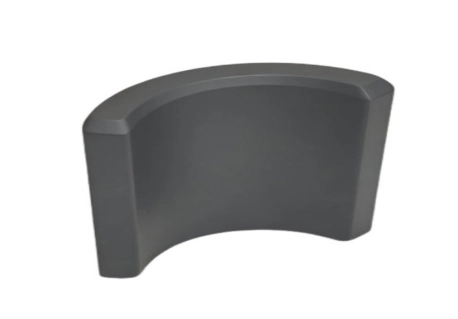
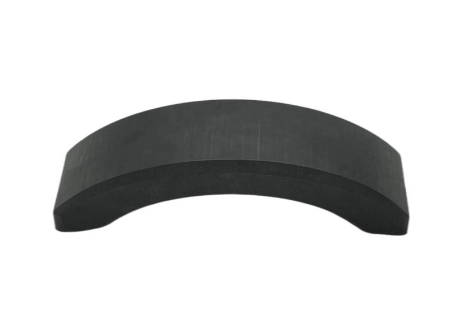
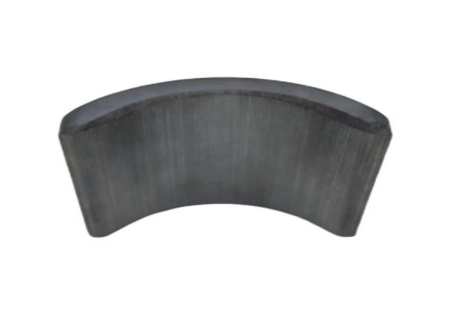
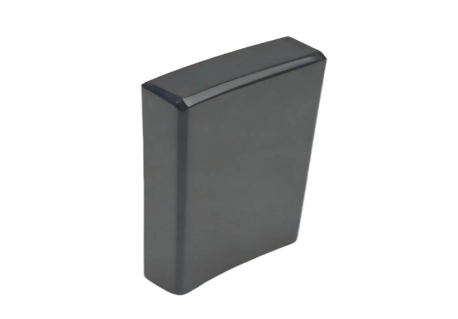
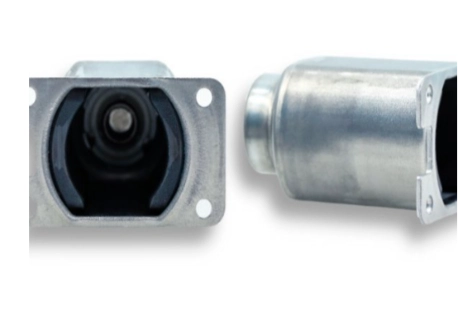
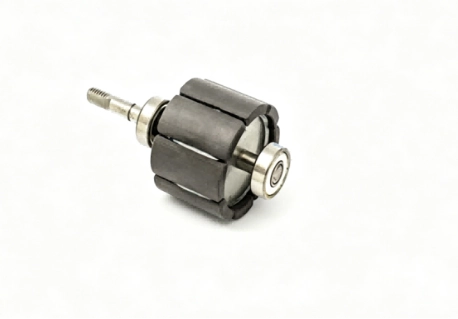
In permanent magnet motors, multiple magnetic tiles (one tile per pole) are commonly used, mainly made of NdFeB or ferrite. The magnet is composed of 2 or even dozens of magnetic tiles. The commonly used magnetization methods include:
📌 Parallel Magnetization
📌 Radial Magnetization
This paper focuses on the air-gap magnetic field generated by 2-pole and 4-pole magnetic tiles under the two magnetization methods mentioned above.
🔍 Case Study: 3 kW, 100 kr/min High-speed Motor
▶️ 2-pole Magnetic Tiles
The figure below shows the air-gap magnetic field distribution waveforms under different magnetization methods:
– Radial Magnetization:
• Air-gap magnetic field: Close to a trapezoidal waveform
• Fourier decomposition results:
– Fundamental component: Only 91.2% of that under parallel magnetization
– 3rd harmonic: 16.3% of the fundamental component
– 5th harmonic: 3.8% of the fundamental component
– 7th harmonic: 1.0% of the fundamental component
• Conclusion: The 5th and higher-order harmonics are very small.
▶️ 4-pole Magnetic Tiles
The figure below shows the air-gap magnetic field distribution waveforms under different magnetization methods:
– Key Feature: The 5th and higher-order harmonics are negligible.
– Parallel Magnetization: 3rd harmonic = 4.2% of the fundamental component
– Radial Magnetization: 3rd harmonic = 6.2% of the fundamental component
💡 Critical Finding
Compared with radial magnetization, parallel magnetization can increase the fundamental air-gap magnetic field by 26.7%.
📊 Final Analysis
Parallel magnetization makes the air-gap magnetic field close to a sinusoidal distribution, and is beneficial to improving the fundamental component of the magnetic field and the effective electromagnetic torque.
📩 shirley@gaumumagnet.com
How to Choose the Right Ferrite Magnet for Your Motor? (A Quick Guide)
5th May 2026
Choosing the wrong magnet grade can lead to motor inefficiency or unnecessary costs. Here is a 7-step checklist to help you select the perfect permanent magnet for your application:
1️⃣ Know Your Motor Type
● General/Home Appliances/Toys: Economical Ferrite is usually sufficient.
● Automotive/Servo Motors: Choose grades with higher stability and uniformity.
2️⃣ Select the Magnetic Grade
● Y30: Cost-effective, for general requirements.
● Y35: The “Sweet Spot” – best value for money and most widely used.
● Y40/Y46: For high torque and compact designs requiring higher performance.
💡 Tip: Don’t blindly choose high numbers. Meet the performance requirement to control costs.
3️⃣ Check the Specs
Ensure the arc length, thickness, and tolerance match your stator perfectly. Thickness directly influences flux and demagnetization risk.
4️⃣ Consider the Environment
● High Temp: Choose high-temperature resistant grades.
● Humid/Dusty: Ensure the magnet is dense, crack-free.
5️⃣ Magnetization & Poles
Confirm the number of poles (2, 4, 6, 8…) and direction (Radial/Multi-pole) to match your rotor design.
6️⃣ Surface & Assembly
Look for smooth surfaces without air pores. Decide on assembly methods (gluing vs. snapping) early to ensure dimensional accuracy.
7️⃣ Cost Efficiency
Ferrite is the king of cost-performance. Don’t switch to expensive Neodymium unless you absolutely have to.
Need help selecting the right grade for your project?
We specialize in high-quality Ferrite Magnets (Y30-Y40). DM me for a free consultation or quote! 📩 shirley@gaumumagnet.com
FerriteMagnet