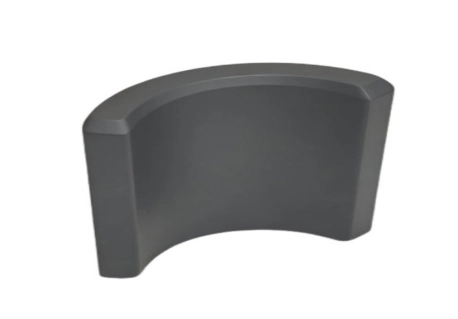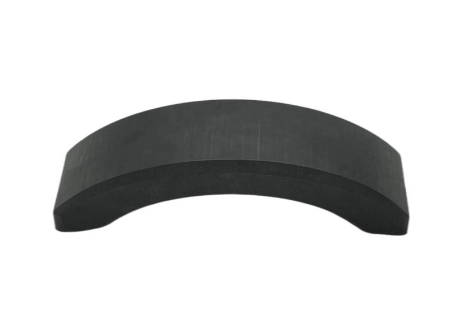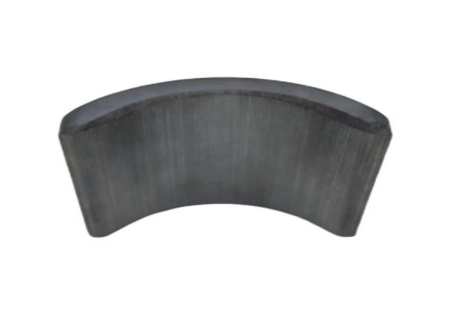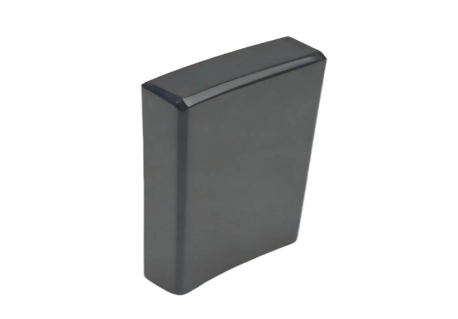
Save Copper Wire! Silicon Steel Sheet Cost Reduced by Over 30%!
Sparen Sie Kupferdraht! Siliziumstahlblechkosten um über 30 % gesenkt!
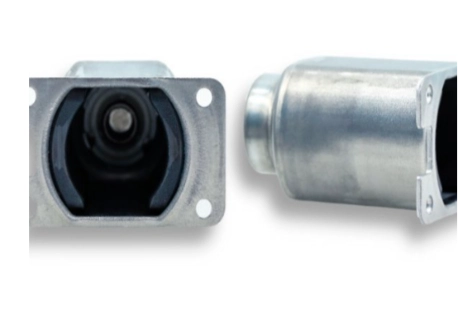
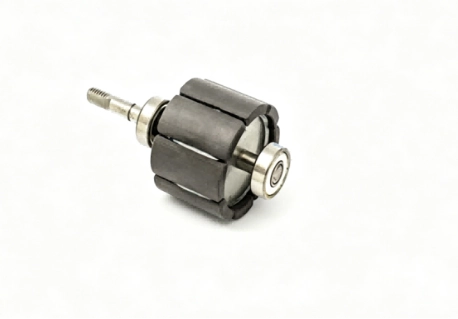
Wir haben eine innovative Lösung entwickelt, die die herkömmlichen, separaten Magnetplättchen in Ventilatormotoren ersetzt. ✅ Diese Lösung verwendet Ferritmagnete der Güteklasse Y30 mit Kunststoffbeschichtung. ✅ Unterstützt 10-, 14- und 16-polige Ausführungen. ✅ Außendurchmesser ca. 100–160 mm. ✅ Innen- und Außendurchmesser können individuell an Ihre Anforderungen angepasst werden. � Hauptanwendung: Industrielle Deckenventilatormotoren Diese optimierte Lösung spart effektiv Kupferdraht und senkt die Kosten für Siliziumstahlblech um mehr als 30 %. Dadurch werden die Wirtschaftlichkeit und Wettbewerbsfähigkeit Ihres Produkts deutlich verbessert. � Interessierte Kunden können sich gerne an unseren Online-Kundenservice wenden, um Muster und ein offizielles Angebot anzufordern! E-Mail: shirley@gaumumagnet.com Website: www.gaumumagnet.com 话题标签#IndustrialFanMotor 话题标签#FerriteMagnet 话题标签#PlasticCoatedMagnet 话题标签#MotorCostSaving 话题标签#MotorAccessories 话题标签#ManufacturingSolution
9th Juni 2026
Ferrite replacing Rare Earths? It’s not just a theory anymore.
Ferrit als Ersatz für Seltene Erden? Das ist nicht länger nur eine Theorie.
In der Motorenindustrie herrscht noch immer die Überzeugung vor: „Hohe Leistung = Seltene Erden (NdFeB)“. Angesichts volatiler Preise und Lieferkettenrisiken sind „Seltene-Erden-freie“ Lösungen jedoch bereits Realität. Hier sind drei Erfolgsbeispiele für den Einsatz von Ferriten, die jeder Ingenieur und Einkäufer kennen sollte: 1. Branchenübergreifender Maßstab: Gree Kaibang. Bereits 2010 brachte das Unternehmen seltene-Erden-freie Synchronreluktanzmotoren auf den Markt, die heute in über 100 Millionen frequenzgeregelten Klimaanlagen zum Einsatz kommen. Noch beeindruckender ist, dass diese Technologie auch für Hauptantriebsmotoren von Nutzfahrzeugen mit Elektroantrieb (40–200 kW) skaliert wurde und dabei die höchste IE5-Effizienzklasse erreicht. 2. Die „Verborgenen Champions“ Bei Klimakompressoren haben Branchenriesen wie Panasonic, Wanbao und Rechi bewiesen, dass Ferrit-Frequenzumrichterkompressoren für Geräte unter 1,5 PS die Tier-1-Energieeffizienzstandards vollständig erfüllen können. Steigende Preise für Seltene Erden bieten Ferrit die optimale Stabilisierung. 3. Die Technologie-Roadmap von Japan: Proterial (ehemals Hitachi Metals) hat bereits Prototypen von Elektrofahrzeugmotoren entwickelt, die ausschließlich mit Ferritmagneten arbeiten und die Leistungsanforderungen erfüllen. Dies beweist, dass die Leistungsgrenzen von Ferrit durch innovative Magnetplatzierung und Schaltungsdesigns kontinuierlich erweitert werden. � Mein Fazit: Die zentrale Herausforderung lautet nicht mehr: „Funktioniert Ferrit?“, sondern: „Wie optimieren wir die Topologie magnetischer Schaltungen (z. B. SynRM-Designs), um das Kosten-Nutzen-Verhältnis zu maximieren?“ Wenn Sie nach kostengünstigen Lösungen suchen oder sich für Ferritmotoren interessieren, kontaktieren Sie uns! #FerriteMagnet 话题标签#RareEarthFree 话题标签#ElectricMotor 话题标签#CostReduction 话题标签#SupplyChain 话题标签#Engineering 话题标签#HVAC话题标签#EV
8th Juni 2026
Eccentric Ferrite Arc Magnets: What They Are & Their Functions
Exzentrische Ferrit-Bogenmagnete: Was sie sind und ihre Funktionen
In the rotor design of permanent magnet motors, magnetic arc segments are key components that directly determine magnetic field distribution and overall motor performance. Eccentric arc magnets (also known as eccentric magnetic tiles) are an optimized structure developed based on standard equal-thickness magnets. What is an eccentric arc magnet? Unlike concentric arc magnets, where the inner and outer arcs share the same center, an eccentric arc magnet has different centers for its inner and outer radii. This special geometry creates a gradually varying thickness across the magnet, from the thickest point to the thinnest point. This design is intentional, not a manufacturing defect — it is a precision-engineered magnetic circuit optimization. Main functions of eccentric ferrite arc magnets Produce a more sinusoidal air-gap magnetic field Reduce magnetic harmonics effectively Lower motor noise, vibration and cogging torque Improve running smoothness and efficiency Typical applications Eccentric magnets are widely used in high-performance motors where low noise and stable operation are critical: Inverter air conditioner compressor motors New energy vehicle drive & auxiliary motors High-speed, low-noise micro motors High-efficiency permanent magnet synchronous motors (PMSM) If you need custom eccentric ferrite arc magnets, rotor magnets, samples or quotations, welcome to contact us for professional support. 📩 shirley@gaumumagnet.com
5th Mai 2026
10 FAQs About Flywheel Magnets
10 häufig gestellte Fragen zu Schwungradmagneten
Flywheel magnets are critical magnetic components in motors, generators, and small power systems. Their performance directly impacts efficiency, stability, and service life. Here are the 10 most common questions and answers for engineers and buyers. Q1: What is a flywheel magnet? A flywheel magnet is a permanent magnet mounted on a rotating flywheel (magneto rotor) to generate a stable magnetic field, widely used in small engines, generators, magnetic bikes, and garden machinery. Q2: What materials are commonly used for flywheel magnets? The main materials are ferrite magnets (cost-effective & stable) and neodymium magnets (high magnetic strength & compact size). Q3: What structures do flywheel magnets usually have? They are typically designed as arc-shaped segments or one-piece magnetic rings to fit different rotor diameters and pole requirements. Q4: How to tell if a flywheel magnet is damaged or demagnetized? Common symptoms include: Hard starting or unstable ignition Reduced engine power and poor combustion Insufficient generator output or weak lighting These are usually caused by magnetic loss or demagnetization. Q5: What is the function of flywheel magnets? They induce electromotive force by rotating relative to coils, supporting ignition and charging systems, and ensuring stable operation of engines and motors. Q6: How long do flywheel magnets last? With proper use (no overheating, no strong impact), high-quality flywheel magnets can last for years. High temperatures or harsh environments may accelerate demagnetization. Q7: Are all flywheel magnets the same? No. They vary in size, arc, pole number, magnetic grade, and temperature resistance and must be matched to specific applications. Q8: Can I replace only one damaged flywheel magnet? Technically yes, but full set replacement is recommended to ensure uniform magnetic field distribution and avoid vibration or abnormal performance. Q9: What temperature resistance is required? General motors: 80–120°C Gasoline engine flywheels: above 150°C High-temperature applications: 180°C+ Inappropriate temperature grades lead to irreversible demagnetization. Q10: Is stronger magnetism always better? No. Magnetic strength must match system design. Excessively high magnetism can cause signal distortion, increased losses, and unnecessary cost. If you need custom flywheel magnets, technical support or quotations, feel free to contact us.📩 shirley@gaumumagnet.com
5th Mai 2026
The commonly used magnetization methods
Die gebräuchlichen Magnetisierungsmethoden
Air-gap Magnetic Field Produced by 2-pole and 4-pole Magnetic Tiles Under Different Magnetization Methods In permanent magnet motors, multiple magnetic tiles (one tile per pole) are commonly used, mainly made of NdFeB or ferrite. The magnet is composed of 2 or even dozens of magnetic tiles. The commonly used magnetization methods include: 📌 Parallel Magnetization 📌 Radial Magnetization This paper focuses on the air-gap magnetic field generated by 2-pole and 4-pole magnetic tiles under the two magnetization methods mentioned above. 🔍 Case Study: 3 kW, 100 kr/min High-speed Motor ▶️ 2-pole Magnetic Tiles The figure below shows the air-gap magnetic field distribution waveforms under different magnetization methods: – Radial Magnetization: • Air-gap magnetic field: Close to a trapezoidal waveform • Fourier decomposition results: – Fundamental component: Only 91.2% of that under parallel magnetization – 3rd harmonic: 16.3% of the fundamental component – 5th harmonic: 3.8% of the fundamental component – 7th harmonic: 1.0% of the fundamental component • Conclusion: The 5th and higher-order harmonics are very small. ▶️ 4-pole Magnetic Tiles The figure below shows the air-gap magnetic field distribution waveforms under different magnetization methods: – Key Feature: The 5th and higher-order harmonics are negligible. – Parallel Magnetization: 3rd harmonic = 4.2% of the fundamental component – Radial Magnetization: 3rd harmonic = 6.2% of the fundamental component 💡 Critical Finding Compared with radial magnetization, parallel magnetization can increase the fundamental air-gap magnetic field by 26.7%. 📊 Final Analysis Parallel magnetization makes the air-gap magnetic field close to a sinusoidal distribution, and is beneficial to improving the fundamental component of the magnetic field and the effective electromagnetic torque. 📩 shirley@gaumumagnet.com
5th Mai 2026
12
Produkte
Kontakte
WhatsApp
E-Mail
Produkte
Kontakt
WhatsApp
E-Mail