¡Ahorre en alambre de cobre! ¡El costo de la lámina de acero al silicio se ha reducido en más del 30%!
9th junio 2026
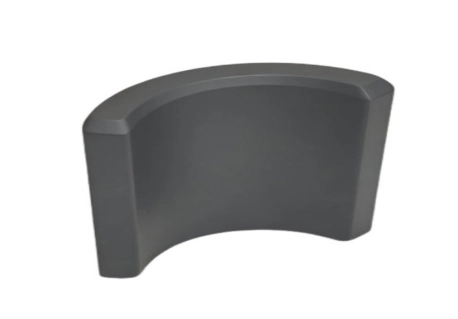
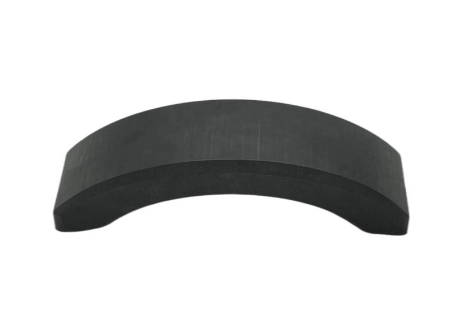
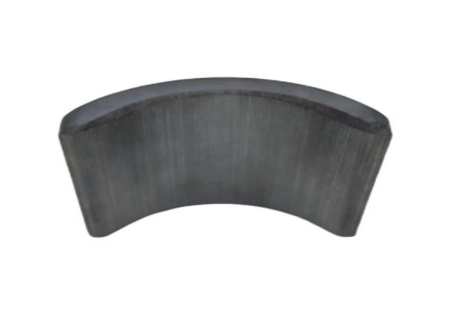
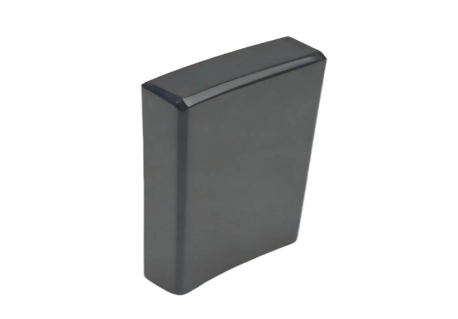
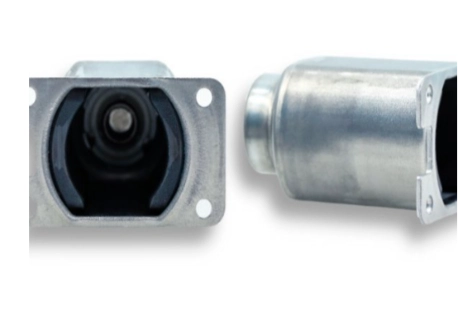
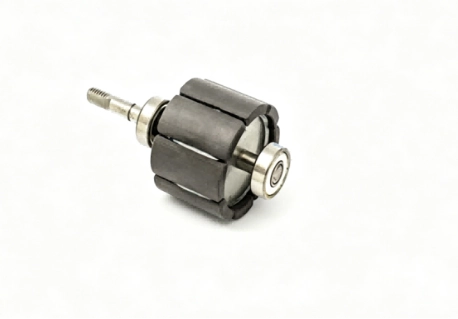
Hemos lanzado una solución innovadora para reemplazar las placas magnéticas tradicionales utilizadas en los motores de ventiladores.
✅ Esta solución utiliza imanes de ferrita de grado Y30 con recubrimiento plástico.
✅ Admite diseños de 10, 14 y 16 polos.
✅ Diámetro exterior aproximado de 100 a 160 mm.
✅ Tanto el diámetro interior como el exterior se pueden personalizar completamente según sus necesidades.
� Aplicación principal: Motores industriales para ventiladores de techo.
Esta solución optimizada ahorra eficazmente el uso de cable de cobre y reduce los costos de la lámina de acero al silicio en más del 30 %, mejorando significativamente la rentabilidad y la competitividad de su producto en el mercado.
� ¡Los clientes interesados pueden contactar con nuestro servicio de atención al cliente en línea para solicitar muestras y presupuestos oficiales! Correo electrónico: shirley@gaumumagnet.com Sitio web: www.gaumumagnet.com
话题标签#IndustrialFanMotor 话题标签#FerriteMagnet 话题标签#PlasticCoatedMagnet 话题标签#MotorCostSaving 话题标签#MotorAccessories话题标签#ManufacturingSolution
¿La ferrita sustituyendo a las tierras raras? Ya no es solo una teoría.
8th junio 2026
En la industria automotriz, muchos aún creen que "Alto rendimiento = Tierras raras (NdFeB)". Sin embargo, ante la volatilidad de los precios y los riesgos en la cadena de suministro, las soluciones "libres de tierras raras" ya son una realidad comercial.
Aquí presentamos 3 casos de éxito en la adopción de ferritas que todo ingeniero y comprador debería conocer:
1. El referente intersectorial: Gree Kaibang. En 2010, lanzaron motores síncronos de reluctancia libres de tierras raras, que ahora se utilizan en más de 100 millones de aires acondicionados de frecuencia variable. Aún más impresionante, esta tecnología se ha extendido a los motores de accionamiento principal de vehículos eléctricos comerciales (40-200 kW), alcanzando una eficiencia ultra premium IE5.
2. Los "campeones ocultos" En compresores HVAC, gigantes como Panasonic Wanbao y Rechi han demostrado que, para unidades de menos de 1,5 HP, los compresores VFD de ferrita cumplen plenamente con los estándares de eficiencia energética Tier 1. Cuando los precios de las tierras raras se disparan, la ferrita se convierte en el estabilizador definitivo.
3. La hoja de ruta tecnológica de Japón: Proterial (antes Hitachi Metals) ya ha desarrollado prototipos de motores para vehículos eléctricos que utilizan únicamente imanes de ferrita y que cumplen con los requisitos de potencia. Esto demuestra que, gracias a la innovadora colocación de imanes y al diseño de circuitos, los límites de rendimiento de la ferrita se amplían constantemente.
� Mi conclusión: El desafío principal ya no es "¿Puede funcionar la ferrita?", sino "¿Cómo optimizamos la topología del circuito magnético (como los diseños SynRM) para maximizar su relación coste-rendimiento?".
Si busca soluciones para reducir costes o le interesa el diseño de motores de ferrita, ¡contáctenos!
#FerriteMagnet 话题标签#RareEarthFree 话题标签#ElectricMotor 话题标签#CostReduction 话题标签#SupplyChain 话题标签#Engineering 话题标签#HVAC话题标签#EV
Imanes de arco de ferrita excéntricos: qué son y sus funciones
5th mayo 2026
In the rotor design of permanent magnet motors, magnetic arc segments are key components that directly determine magnetic field distribution and overall motor performance.
Eccentric arc magnets (also known as eccentric magnetic tiles) are an optimized structure developed based on standard equal-thickness magnets.
What is an eccentric arc magnet?
Unlike concentric arc magnets, where the inner and outer arcs share the same center, an eccentric arc magnet has different centers for its inner and outer radii.
This special geometry creates a gradually varying thickness across the magnet, from the thickest point to the thinnest point. This design is intentional, not a manufacturing defect — it is a precision-engineered magnetic circuit optimization.
Main functions of eccentric ferrite arc magnets
Produce a more sinusoidal air-gap magnetic field
Reduce magnetic harmonics effectively
Lower motor noise, vibration and cogging torque
Improve running smoothness and efficiency
Typical applications
Eccentric magnets are widely used in high-performance motors where low noise and stable operation are critical:
Inverter air conditioner compressor motors
New energy vehicle drive & auxiliary motors
High-speed, low-noise micro motors
High-efficiency permanent magnet synchronous motors (PMSM)
If you need custom eccentric ferrite arc magnets, rotor magnets, samples or quotations, welcome to contact us for professional support.
📩 shirley@gaumumagnet.com
10 preguntas frecuentes sobre los imanes de volante
5th mayo 2026
Flywheel magnets are critical magnetic components in motors, generators, and small power systems. Their performance directly impacts efficiency, stability, and service life. Here are the 10 most common questions and answers for engineers and buyers.
Q1: What is a flywheel magnet?
A flywheel magnet is a permanent magnet mounted on a rotating flywheel (magneto rotor) to generate a stable magnetic field, widely used in small engines, generators, magnetic bikes, and garden machinery.
Q2: What materials are commonly used for flywheel magnets?
The main materials are ferrite magnets (cost-effective & stable) and neodymium magnets (high magnetic strength & compact size).
Q3: What structures do flywheel magnets usually have?
They are typically designed as arc-shaped segments or one-piece magnetic rings to fit different rotor diameters and pole requirements.
Q4: How to tell if a flywheel magnet is damaged or demagnetized?
Common symptoms include:
Hard starting or unstable ignition
Reduced engine power and poor combustion
Insufficient generator output or weak lighting
These are usually caused by magnetic loss or demagnetization.
Q5: What is the function of flywheel magnets?
They induce electromotive force by rotating relative to coils, supporting ignition and charging systems, and ensuring stable operation of engines and motors.
Q6: How long do flywheel magnets last?
With proper use (no overheating, no strong impact), high-quality flywheel magnets can last for years. High temperatures or harsh environments may accelerate demagnetization.
Q7: Are all flywheel magnets the same?
No. They vary in size, arc, pole number, magnetic grade, and temperature resistance and must be matched to specific applications.
Q8: Can I replace only one damaged flywheel magnet?
Technically yes, but full set replacement is recommended to ensure uniform magnetic field distribution and avoid vibration or abnormal performance.
Q9: What temperature resistance is required?
General motors: 80–120°C
Gasoline engine flywheels: above 150°C
High-temperature applications: 180°C+
Inappropriate temperature grades lead to irreversible demagnetization.
Q10: Is stronger magnetism always better?
No. Magnetic strength must match system design. Excessively high magnetism can cause signal distortion, increased losses, and unnecessary cost.
If you need custom flywheel magnets, technical support or quotations, feel free to contact us.📩 shirley@gaumumagnet.com
Los métodos de magnetización comúnmente utilizados
5th mayo 2026
Air-gap Magnetic Field Produced by 2-pole and 4-pole Magnetic Tiles Under Different Magnetization Methods
In permanent magnet motors, multiple magnetic tiles (one tile per pole) are commonly used, mainly made of NdFeB or ferrite. The magnet is composed of 2 or even dozens of magnetic tiles. The commonly used magnetization methods include:
📌 Parallel Magnetization
📌 Radial Magnetization
This paper focuses on the air-gap magnetic field generated by 2-pole and 4-pole magnetic tiles under the two magnetization methods mentioned above.
🔍 Case Study: 3 kW, 100 kr/min High-speed Motor
▶️ 2-pole Magnetic Tiles
The figure below shows the air-gap magnetic field distribution waveforms under different magnetization methods:
– Radial Magnetization:
• Air-gap magnetic field: Close to a trapezoidal waveform
• Fourier decomposition results:
– Fundamental component: Only 91.2% of that under parallel magnetization
– 3rd harmonic: 16.3% of the fundamental component
– 5th harmonic: 3.8% of the fundamental component
– 7th harmonic: 1.0% of the fundamental component
• Conclusion: The 5th and higher-order harmonics are very small.
▶️ 4-pole Magnetic Tiles
The figure below shows the air-gap magnetic field distribution waveforms under different magnetization methods:
– Key Feature: The 5th and higher-order harmonics are negligible.
– Parallel Magnetization: 3rd harmonic = 4.2% of the fundamental component
– Radial Magnetization: 3rd harmonic = 6.2% of the fundamental component
💡 Critical Finding
Compared with radial magnetization, parallel magnetization can increase the fundamental air-gap magnetic field by 26.7%.
📊 Final Analysis
Parallel magnetization makes the air-gap magnetic field close to a sinusoidal distribution, and is beneficial to improving the fundamental component of the magnetic field and the effective electromagnetic torque.
📩 shirley@gaumumagnet.com