
- 7th August 2026
Permanent magnet synchronous generators (PMSGs) convert mechanical rotation into electricity. They do this without rotor excitation windings. This basic description hides a crucial design choice. The selected magnet material greatly influences cost and size. It also affects temperature behavior, corrosion risk, and supply security.
For many engineers today, ferrite is getting fresh attention. It cannot match rare-earth magnets regarding flux density. However, a well-designed magnetic circuit can change things. It turns the low cost and stable sourcing of ferrite into a real advantage.
How a Permanent Magnet Synchronous Generator Produces Power
A PMSG features two primary electromagnetic parts. First, there is a rotor carrying permanent magnets. Second, there is a stator carrying copper windings. A turbine, engine, or another prime mover spins the rotor. As it spins, its magnetic field sweeps across the stator conductors. This action induces an alternating voltage based on Faraday’s law.
The electrical frequency matches the rotor speed and the pole count:
f = p × n / 120
In this formula, p stands for the number of poles. Meanwhile, n represents the rotational speed in revolutions per minute.
The rotor field originates from permanent magnets. Therefore, the machine does not require brushes or slip rings. It also avoids needing a separate DC field supply. This setup reduces rotor losses and eliminates common wear parts. The rotor stays locked in step with the rotating stator field. That is exactly why the machine is called synchronous.
The output still requires power electronics when the speed fluctuates. This fluctuation happens often in wind turbines.
From Magnetic Flux to Grid-Ready Electricity
The energy path is quite straightforward. Yet, each stage impacts the final output quality. Designers must balance pole geometry, air gap, and winding layout. They also consider cooling and converter control. The sequence below illustrates where magnet performance truly matters. It explains why a lower-flux material can function well if the entire machine is built around it.
- Mechanical input spins the main shaft and the magnetized rotor.
- Alternating rotor poles push changing magnetic flux through the stator teeth.
- Three-phase windings generate AC voltage. This amplitude connects directly to speed, winding turns, and air-gap flux.
- A rectifier and an inverter can regulate the voltage and frequency. They adjust it for the grid, a battery, or a local load.
- Control software handles torque, current, and protection limits across the whole operating range.
Ferrite Magnet Material: What Designers Need to Know
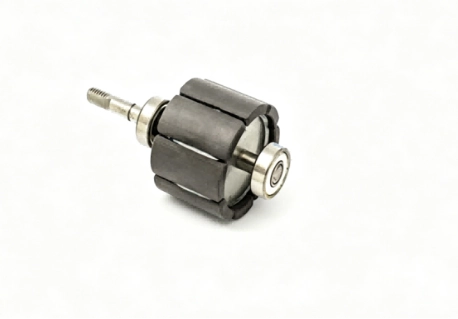
Ceramic ferrite consists mostly of iron oxide mixed with strontium or barium compounds. The mixture is then pressed and sintered. This material is electrically resistive and naturally resistant to corrosion. It is highly suitable for repeat production runs.
For a closer look at available compositions, grades, and motor forms, please view our ceramic ferrite magnet range.
- Magnetic strength: Ferrite possesses lower remanence and energy product compared to rare-earth magnet materials. Thus, it usually requires more magnet volume or a flux-concentrating shape.
- Temperature behavior: It provides strong resistance to irreversible demagnetization at high temperatures. However, its magnetic output varies with temperature. Therefore, engineers must review the complete operating curve.
- Corrosion and coating: Ferrite resists oxidation without needing a protective metallic coating in most environments. This feature simplifies the overall bill of materials.
- Mechanical behavior: Like other ceramics, ferrite is quite hard but also brittle. Arc segments need controlled grinding and careful handling. They also require secure retention within the rotor.
- Electrical resistance: High resistivity prevents excessive eddy-current heating inside the magnet. This trait is very useful during harmonic-rich converter operations.
Why Choose Ferrite Magnets for a PMSG?
Ferrite is not a simple drop-in replacement for a rare-earth magnet. It becomes appealing when engineers evaluate complete system costs and risks, rather than just looking at magnet strength.
The best situations have space for a larger rotor. They might have moderate torque-density goals or steady high-volume demand. Frequent exposure to heat and moisture also makes ferrite a smart choice.
- Lower and more predictable material cost: Iron oxide and strontium-based feedstocks are easy to find. This availability makes ferrite ideal for cost-sensitive, high-volume generators.
- Reduced rare-earth exposure: A ferrite PMSG completely avoids neodymium, praseodymium, dysprosium, and terbium. This absence helps purchasing teams minimize geopolitical and price risks.
- Good hot-environment reliability: High-coercivity grades can withstand demagnetizing fields. These fields are often caused by armature reaction and short-circuit events when chosen correctly.
- No routine magnet coating: Inherent corrosion resistance can eliminate coating steps. This reduces the risk of coating damage during the assembly process.
- Long service life: The PMSG architecture operates without brushes and field windings. This setup supports a reliable, low-maintenance generator design.
Main Ferrite Product Forms for Generator Design
Magnet grade alone does not dictate generator performance. Shape, orientation, and pole arc are also important. Dimensional tolerance and magnetization direction control how flux travels across the air gap.
Therefore, a sourcing drawing should detail the entire magnetic circuit. It should not just list the magnet’s outer dimensions. Three main product families cover most PMSG concepts.
Arc and Segment Magnets
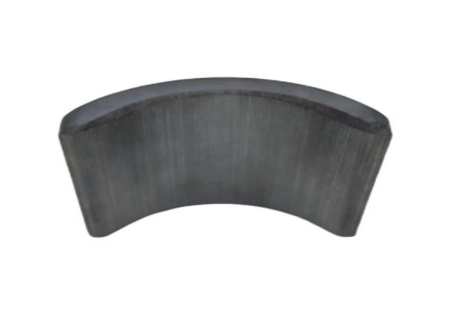
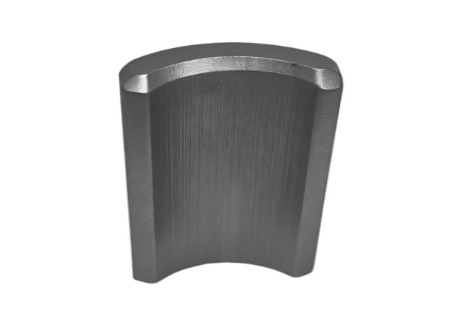
Curved segments match the rotor surface. They are very common in radial-flux machines. Their pole-arc ratio can be modified to reduce voltage harmonics. This adjustment also lowers cogging torque and acoustic noise.
Wet-pressed anisotropic grades offer a specific magnetic direction. They provide stronger useful flux than isotropic ferrite. At GAUMU MAGNET, we deliver customized ferrite segments. We base these on required magnetic properties, shape, dimensions, and specific motor or generator conditions.
Block and Bar Magnets
Blocks and bars fit well in buried-magnet, spoke-type, and flux-concentrating rotors. Spoke arrangements are particularly useful for ferrite. This is because steel paths can focus magnetic flux at the air gap.
This particular design consumes more rotor volume. It also requires careful bridge sizing. However, it can close the performance gap without using rare-earth materials.
Multipole Rings and Custom Assemblies
Multipole rings can decrease assembly time. They also boost pole-to-pole consistency in smaller machines. Larger generators frequently rely on matched segment sets. These sets use dedicated fixtures and retention systems.
Our product scope covers both generator and motor applications. Buyers can explore the wider GAUMU MAGNET product portfolio before talking about a custom magnetic circuit.
Where Ferrite PMSGs Fit Best?
PMSGs are found wherever efficient variable-speed generation is needed. They are great when low maintenance and solid part-load performance are important. Ferrite pushes the design toward material toughness and overall system value.
The most promising sectors can accept slightly lower power density. In return, they get stable costs, simple protection, and a long operating life.
- Small and distributed wind power: Direct-drive or low-speed machines can utilize many poles and a bigger diameter. This creates ample space for ferrite segments.
- Portable inverter generators: Variable-speed operation matches perfectly with electronic power conversion. Meanwhile, ferrite aids in cost control and heat resistance.
- Hydro systems: Corrosion-resistant magnets and brushless operation are perfect for remote equipment. This is true as long as the housings and bearings are sealed properly.
- Industrial energy recovery: PMSGs can capture power from expanders, turbines, and flywheels. They also work well with process equipment under varying speeds.
- Auxiliary generation: Engine-driven units gain from high efficiency and controlled output. They also benefit from reduced rare-earth exposure.
GAUMU MAGNET supports ferrite applications in wind power, automotive equipment, and household appliances. We also cover power tools and industrial motors. Our application overview assists engineering and purchasing teams. It helps them link the magnet form with the intended motor or generator duty.
The 2025–2026 Industry Hotspot: Supply Resilience
Selecting a magnet is now a supply-chain decision. It is no longer just an electromagnetic choice.
The IEA’s rare-earth analysis states that export controls started in April 2025. These controls drastically cut shipments and disrupted manufacturers. Furthermore, its Global Critical Minerals Outlook 2025 connects growing permanent magnet demand to electric vehicles and wind power. It also warns that refined rare-earth supply stays heavily concentrated.
This intense pressure is speeding up three development paths:
- Reducing heavy rare-earth content
- Recycling permanent magnets
- Developing machines that use little or no rare earth
Ferrite PMSGs fall into the third path. They will not swap out high-energy magnets in every offshore turbine. They also won’t replace them in weight-critical generators. However, they can shield suitable projects from sudden price shocks and licensing delays.
The practical question is not just, “Which magnet is strongest?” Instead, it is, “Which machine meets output, lifetime, cost, and sourcing goals with a reasonable engineering margin?”
Engineering Checks Before Selecting Ferrite
A successful switch begins with simulation and testing. Engineers must model the entire demagnetization curve. They should do this at the coldest and hottest operating points. This is necessary because ferrite’s temperature coefficients are different from those of rare-earth magnets.
They must also examine fault current and converter harmonics. Rotor stress, dimensional variation, and production tolerances are equally important.
- Confirm rated power, speed range, pole count, voltage, and specific converter limits.
- Compare surface-magnet, spoke-type, and flux-concentrating rotor topologies carefully.
- Check open-circuit voltage, torque ripple, cogging, and efficiency throughout the duty cycle.
- Verify the maximum demagnetizing field during short circuits and severe overloads.
- Specify grade, dimensions, tolerance, magnetization direction, coating requirement, and matched-set flux clearly.
- Prototype the rotor and conduct thermal, vibration, and overspeed tests. Also perform salt-spray and lifetime tests as required by the application.
At GAUMU MAGNET, we evaluate material performance, size, shape, and tolerance. We also look at magnetization direction, order quantity, and final application before providing a quotation.
Our manufacturing process involves wet pressing, sintering, grinding, cleaning, and testing. More details are available on our company and production page.
Conclusion
A permanent magnet synchronous generator produces electricity when a magnetized rotor sends changing flux through stator windings. Its brushless rotor, high efficiency, and solid part-load performance are excellent for wind, hydro, and inverter generation. They also work well for industrial energy recovery.
Ferrite magnets bring low cost, corrosion resistance, and heat tolerance. They also offer freedom from rare-earth feedstocks. The trade-off is slightly lower magnetic energy. This might require a larger rotor, more poles, or a flux-concentrating layout.
For teams dealing with 2025–2026 supply uncertainty, ferrite is more than a budget material. It is a clear path to a steadier bill of materials. The best choice comes from system-level design and verified demagnetization margins. It also relies on controlled magnet geometry and prototype testing under real operating conditions.
FAQs
Q: What are ferrite magnets for permanent magnet synchronous generators?
A: They are ceramic permanent magnets that generate rotor flux without using rare-earth elements or electrical excitation.
Q: Can ferrite replace rare-earth magnets in every PMSG?
A: No. Machines that are weight-critical or require high torque density may still need higher-energy magnet materials.
Q: What information is needed for a ferrite generator magnet quote?
A: Please provide the grade, dimensions in mm, tolerance, and magnetization. Also include the quantity in pieces, operating temperature, and the specific application.
Table of Contents
Recent Posts
Why Arc Ferrite Magnets Are Ideal for Rotational Motors
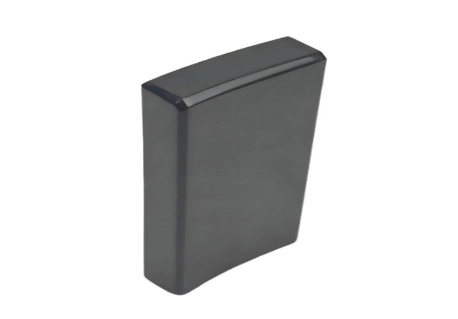
Ceramic Disc Magnet Manufacturer | Custom Ferrite Magnets
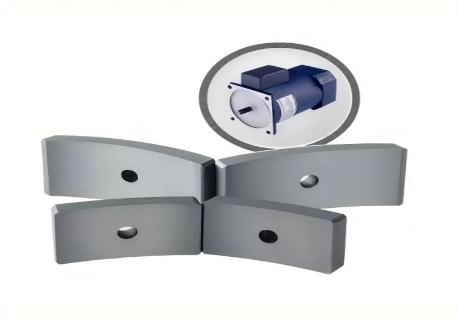
Ferrite Block Magnets Manufacturer | Custom Industrial Motor Magnets
FAQ
What is information we need before quotation for magnet?
2) Size and shape, and magnet tolerances, normally International tolerance is +/-0.1mm
4) Magnetization direction
5) Quantities required.
6) Magnet application