
- 31st July 2026
Industrial plants rely on motors to power pumps, fans, compressors, conveyors, machine tools, and automated lines. These machines often run for thousands of hours each year. Even a modest gain in efficiency can therefore cut a meaningful amount of electricity. This is one reason permanent magnet electric motors now attract interest from plant managers, equipment makers, and engineering teams.
Unlike induction motors, permanent magnet motors do not require electrical current in the rotor to generate a magnetic field. Permanent magnets provide the rotor field instead. This approach reduces internal losses. It also delivers strong torque. In addition, the motor maintains efficiency across a wider operating range. For industries dealing with rising electricity prices, carbon targets, and tighter regulations, the outcome is lower energy use while output remains the same.
Why Industrial Motor Efficiency Matters More Than Ever?
Motor-driven systems account for a large portion of electricity consumption in factories and commercial equipment. A recent global energy-efficiency report notes that many industrial motors still fall outside minimum performance standards. At the same time, the European Union now requires IE4 efficiency for certain 75–200 kW motors. This change raises expectations for energy-efficient industrial motors in other regions.
For industrial buyers, the purchase price is not the only concern. Electricity usually represents the largest share of a motor’s lifetime cost. A motor that runs continuously can consume several times its original price in power over its service life. Permanent magnet electric motors address this reality. They reduce rotor losses and improve performance under variable-speed conditions.
How Permanent Magnet Motors Cut Energy Losses?
The energy-saving effect results from several elements working together. These include magnet material, rotor design, air-gap accuracy, drive control, cooling, and load profile. When these factors are properly matched, permanent magnet motor efficiency stays high during rated operation and during varying production demands.
Lower Rotor Losses
An induction motor generates rotor magnetism through induced current. This current creates heat. The heat appears as rotor copper or aluminum loss. A permanent magnet rotor does not need induced current. As a result, a major source of electrical loss is eliminated.
Reduced rotor heat delivers several practical benefits. More input electricity converts into useful mechanical power. The motor requires less cooling to achieve the same output. Insulation and bearings experience lower thermal stress. High torque becomes available from a smaller frame size. These advantages prove especially valuable in long-running pumps, fans, compressors, and conveyors.
Strong Efficiency at Partial Load
Industrial motors seldom operate at a single load throughout the day. Production volumes change. Flow and pressure demands rise and fall. Traditional motors often lose efficiency when they run well below rated load.
A permanent magnet synchronous motor can maintain higher efficiency across a broad speed and load range. When paired with a variable frequency drive, the motor reduces speed. It does not waste energy through valves, dampers, or mechanical braking. This capability produces substantial industrial motor energy savings in variable-torque applications.
Higher Power Density
Permanent magnets create a strong and stable field within a compact rotor. Engineers can therefore design motors that offer high torque density and lower mass. Smaller motors can also decrease the power consumed by cooling fans and associated equipment.
Higher power density improves system response. It reduces inertia. It also supports precise speed control. These features are important in robotics, automated lines, servo systems, and mobile industrial equipment.
Magnet Materials and Their Effect on Motor Performance
The magnet plays a central role in torque production. However, the strongest material is not always the most suitable choice. Engineers must evaluate temperature, corrosion resistance, demagnetization risk, motor size, duty cycle, supply stability, and overall cost. Growing concern about concentrated rare-earth supply chains has increased interest in ferrite-based designs where space and torque needs permit their use.
Ferrite Magnets for Cost-Stable Motor Designs
Ferrite magnets are typically produced from iron oxide combined with strontium or barium compounds. They provide good corrosion resistance, high electrical resistivity, and solid heat tolerance. The high resistivity also reduces eddy-current loss inside the magnet itself. This helps keep rotor temperature under control.
Ferrite is well suited to several applications. These include BLDC fans and appliance motors, pump and generator motors, automotive auxiliary motors, power tools and lawn equipment, fitness equipment, and industrial control motors.
At GAUMU MAGNET, we specialize in permanent ferrite materials for motor applications. Our ceramic ferrite magnet range includes arc, segment, block, bar, and application-specific motor magnets. We can adjust composition, magnetic properties, shape, size, and magnetization direction to fit the customer’s magnetic circuit. Our ferrite materials deliver cost control, corrosion resistance, and working temperatures that can reach 250°C in suitable grades and designs.
Rare-Earth Magnets for Compact High-Torque Motors
Rare-earth magnets provide more magnetic power than standard ferrite. For this reason, engineers pick them when motor size and weight need to stay small. Users find these magnets mostly in compact servo motors. They also work well in traction systems, robotics, and fast spindles.
Buyers must still think about a few issues. These include higher material costs and specific temperature grade needs. Coating rules and limited supply sources also matter. If a project has extra room, a well-planned ferrite motor can be a great choice. It might offer a better balance between price and performance.
Main Product Categories for Permanent Magnet Motors
Motor magnets do not come as one basic item. Many details change how they work. Shape, arc angle, and pole count change the air-gap flux. Magnetic grade and tolerance also affect torque ripple. Buyers should share specific details before they pick a product. They need to provide drawings, operating temperature, and speed. Current, load curve, and magnetization direction are also important. Finally, they should state their yearly demand. These facts connect the magnet details straight to real motor performance.
Arc and Segment Magnets
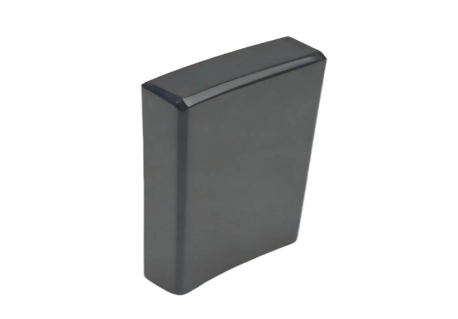
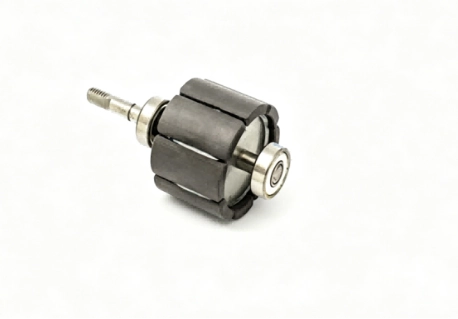
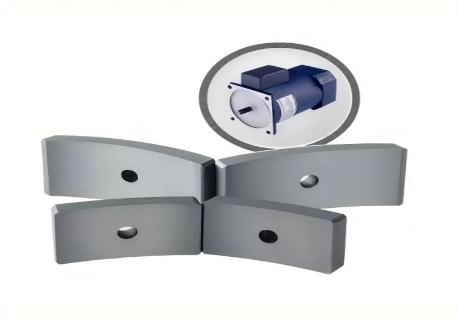
Ferrite arc magnets rest against the inside wall of a motor housing. They create the needed magnetic field. This happens in many brushed DC and BLDC designs. Exact dimensions matter a lot. The right radius, thickness, chord width, and axial length are crucial. They all help keep a steady air gap.
Makers use these magnets a lot in everyday items. You find them in window-lift motors, pumps, and fans. They also sit inside power tools, starter motors, and gym equipment. Good size control brings real benefits. It cuts down on vibration and lowers noise. It also prevents uneven torque.
Block, Bar, and Custom-Shaped Magnets
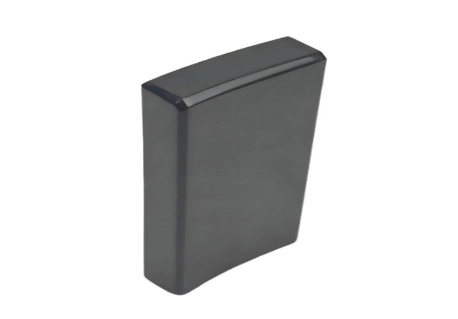
Block and bar magnets do important work in many devices. They go into motors, generators, and magnetic couplings. You also see them in sensors and special magnetic circuits. Sometimes, standard shapes do not fit. Custom shapes become vital when a motor has tight assembly space. They also help if the design follows an unusual flux path.
Teams pick the right product based on the whole magnetic circuit. They do not look at shape alone. A tiny change in thickness or pole orientation matters. Adjusting the air gap is also key. These small shifts can alter the current draw. In fact, they change it more than just adding raw magnetic strength.
Application-Specific Motor Magnets
Application-specific products can shorten development time because the magnet is engineered around a defined motor platform. Our motor magnet product range covers generators, pumps, starters, industrial equipment, appliances, and automotive auxiliary motors. For outdoor power systems, our 4 kW digital motor ferrite magnet employs oriented sintered strontium ferrite, high coercivity, and controlled arc dimensions. These features ensure stable output under demanding conditions.
Major Industrial Applications
Permanent magnet electric motors can reduce industrial energy consumption across many systems. Actual savings depend on operating hours, load variation, and control strategy.
- Pumps and water systems:Variable-speed PM motors match flow to demand and thereby reduce throttling loss.
- Fans and HVAC equipment:High part-load efficiency decreases power consumption during periods of reduced airflow.
- Compressors: Stable torque and speed control support efficient pressure management.
- Conveyors and production lines: High torque density assists with frequent starts, stops, and changing loads.
- Machine tools and robotics: Compact size, precise control, and lower rotor heat enable accurate motion.
- Generators and mobile equipment: Ferrite motor magnets provide corrosion resistance and cost stability in outdoor settings.
- Automotive auxiliary systems: Window, seat, sunroof, cooling, and pump motors benefit from reliable torque.
The strongest business case usually appears in motors that operate for many hours, spend considerable time at partial load, or drive variable-flow equipment.
How to Select a Motor Magnet for Real Energy Savings?
A high magnetic grade by itself does not ensure a low-energy motor. Selection should start with the full duty profile. Engineering teams should examine several factors. These include rated and peak torque, speed range and control method, continuous and short-term temperature, demagnetization risk during overload, air-gap size and dimensional tolerance, noise and torque-ripple limits, corrosion and environmental exposure, target efficiency class, and lifetime cost.
Prototype testing should record input power, output torque, winding temperature, magnet temperature, vibration, and efficiency at multiple load points. This approach yields a clearer picture than testing only at rated load.
Conclusion
Permanent magnet electric motors reduce industrial energy consumption by eliminating rotor excitation loss, lowering heat generation, and sustaining strong efficiency across varying loads. Their high power density can also decrease motor size and enhance control response. Ferrite magnets bring additional benefits: stable cost, natural corrosion resistance, high resistivity, and dependable performance in many medium- and high-temperature duties. The best outcome arises when magnet grade, geometry, air gap, drive control, and operating profile are matched as a single system. As IE4 requirements expand, electricity demand grows, and critical-material supply stays uncertain, efficient motor design is shifting from a future option to a current purchasing priority. Plants that assess lifetime electricity cost instead of initial price alone can achieve clear savings in pumps, fans, compressors, conveyors, generators, and automated machinery.
FAQs
Q: How do permanent magnet electric motors save energy?
A: They eliminate rotor excitation losses and maintain efficiency across wider speed and load ranges.
Q: Are ferrite magnets suitable for industrial motors?
A: Yes. Ferrite offers low cost, corrosion resistance, high resistivity, and useful heat resistance.
Q: Which applications gain the most energy savings?
A: Long-running pumps, fans, compressors, conveyors, and variable-speed equipment usually gain the most.
Table of Contents
Recent Posts
Why Arc Ferrite Magnets Are Ideal for Rotational Motors
Ceramic Disc Magnet Manufacturer | Custom Ferrite Magnets
Ferrite Block Magnets Manufacturer | Custom Industrial Motor Magnets
FAQ
What is information we need before quotation for magnet?
2) Size and shape, and magnet tolerances, normally International tolerance is +/-0.1mm
4) Magnetization direction
5) Quantities required.
6) Magnet application