
- 21st August 2026
Electric mobility, smart appliances, industrial automation, and energy-saving equipment continue to grow. Because of this, motor makers face a real challenge. They need solid magnetic performance. However, they must avoid unpredictable material costs. Reports like the Global EV Outlook 2026 point out steady long-term growth for electrified systems. At the same time, rare earth supply risks still worry many industries.
Ferrite ring magnets serve as a highly practical solution for various motor and magnetic assembly designs. They might not deliver the absolute highest magnetic strength per volume. Still, they provide an excellent balance of cost control and corrosion resistance. They also offer great heat stability and reliable mass production. For buyers, engineers, and product developers, this overall balance often matters much more than just peak magnetic force.
Here at GAUMU MAGNET, we focus entirely on permanent ferrite magnetic materials for motor applications. Our products actively support automotive motors and household appliance motors. We also supply components for industrial control motors, power tools, fitness equipment, digital generators, and magnetic transmission systems.
Material Features of Ferrite Ring Magnets
Manufacturers typically make ferrite ring magnets from strontium ferrite or barium ferrite. They mix these materials with iron oxide using a specific ceramic process. This method creates a hard, highly stable, and non-metallic structure. Before selecting a magnet, engineers usually check the working temperature and demagnetization risk. They also review the air-gap design, assembly method, and overall long-term cost.
Ceramic Structure and Magnetic Stability
Ferrite acts as a reliable ceramic permanent magnet material. It features excellent chemical stability. This makes it perfect for humid, dusty, and warm working environments. In these exact places, uncoated metallic magnets easily face severe corrosion risks. Throughout many motor systems, ferrite ring magnets maintain a very steady magnetic field over long service periods. This holds true especially when designers properly match the grade and magnetic circuit.
Additionally, a ferrite ring magnet remains highly electrically resistive. This specific trait helps reduce eddy current loss inside rotating systems. It performs much better in this regard compared to more conductive materials. For motors running for long hours, this lower loss supports a smaller heat rise. Ultimately, it ensures steadier daily operation.
Temperature and Corrosion Behavior
Industries widely use ferrite magnets because they handle heat exceptionally well. Many of these ferrite materials easily operate in medium to high-temperature conditions. Furthermore, selected grades function perfectly in highly demanding motor environments. Their natural corrosion resistance is another major benefit. It significantly reduces the need for extra surface plating in most cases.
This feature proves quite important for products like outdoor generators and fan motors. It also matters for charging-related motors and standard appliance motors. These specific systems frequently face changing temperatures and moisture. They also endure heavy vibration and repeated start-stop cycles over their lifespan.
Core Advantages in Motors and Magnetic Assemblies
A magnet used in a motor is not judged only by its strength. It must fit the housing, match the magnetic circuit, resist demagnetization, and support repeatable assembly. For high-volume production, even small differences in cost, tolerance, or batch stability can affect the final product.
Cost Control for High-Volume Production
Ferrite ring magnets are among the most cost-effective permanent magnet materials. They do not depend on rare earth elements, so buyers can reduce exposure to rare earth price changes and supply pressure. Recent industry attention on rare earth supply chain risks has made this advantage more valuable.
For motors with enough space for the magnet design, ferrite can deliver strong commercial value. It is often selected for appliances, tools, auxiliary automotive motors, fitness equipment, and industrial devices where stable cost matters.
Strong Resistance to Demagnetization
Many motors face sudden load changes. Examples include treadmill motors, window lift motors, seat adjustment motors, power tools, and outdoor equipment. Ferrite magnets can provide good coercivity, helping the motor keep stable output under changing current, heat, and mechanical load.
GAUMU MAGNET provides ceramic ferrite magnets for multiple motor categories. Our ferrite grades include options for higher remanence, higher intrinsic coercivity, and stable batch performance, depending on the application.
Practical Assembly Performance
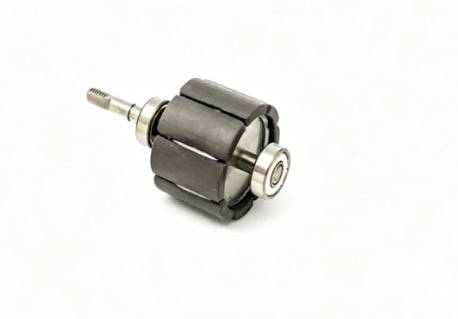
Ring magnets and ferrite arc segments are both used in magnetic assemblies. A full ring can give continuous circular magnetic distribution, while segmented arc magnets are often bonded inside motor housings to form a designed magnetic field.
For assembly teams, dimensional accuracy matters. Smooth surfaces, controlled tolerances, and stable magnetization direction help reduce noise, friction, and rework. In motor manufacturing, that can directly affect yield and delivery time.
Product Classification and Selection Direction
Ferrite ring magnets belong to a wider family of ceramic ferrite products. The best shape depends on the motor structure, available space, required torque, pole number, and assembly process. Some applications need full rings, while others need arc segments, blocks, or custom irregular shapes.
Ring Magnets
Ferrite ring magnets are annular magnets with a center hole. They are used where the design needs circular magnetic force, shaft clearance, or a compact rotating structure. They may be magnetized axially, radially, or with multiple poles, depending on the magnetic circuit.
Common uses include:
- Small motors
- Magnetic couplings
- Magnetic sensors
- Speakers and acoustic devices
- Holding and positioning assemblies
- Rotating magnetic structures
Arc Segment Magnets
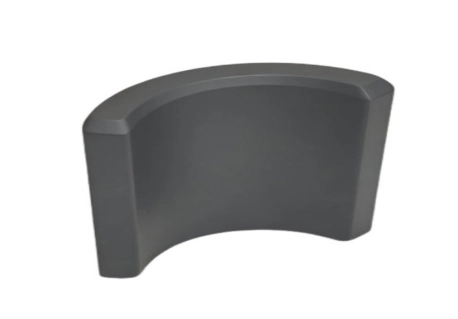
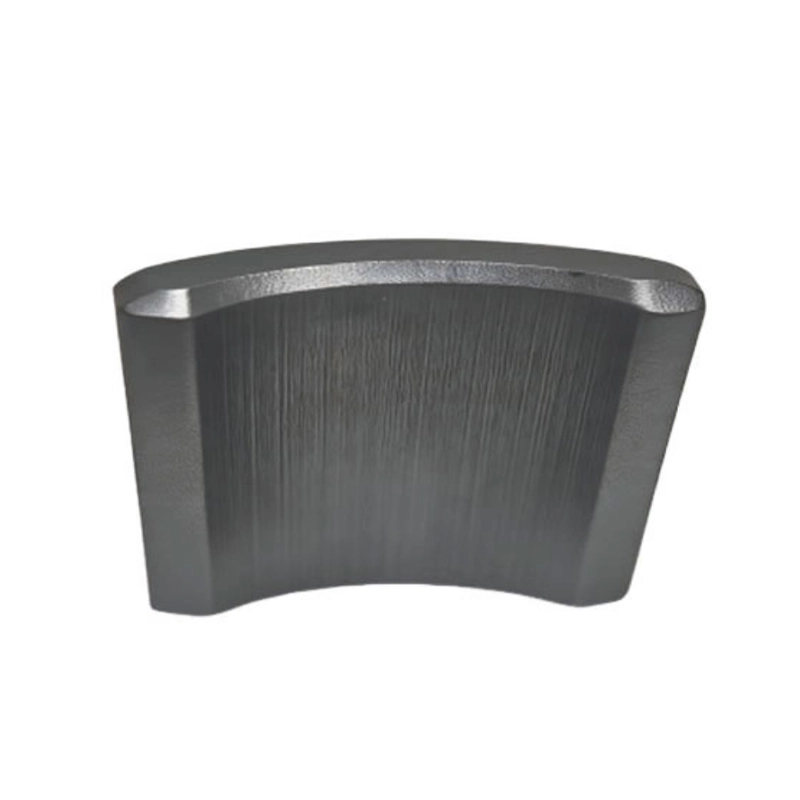
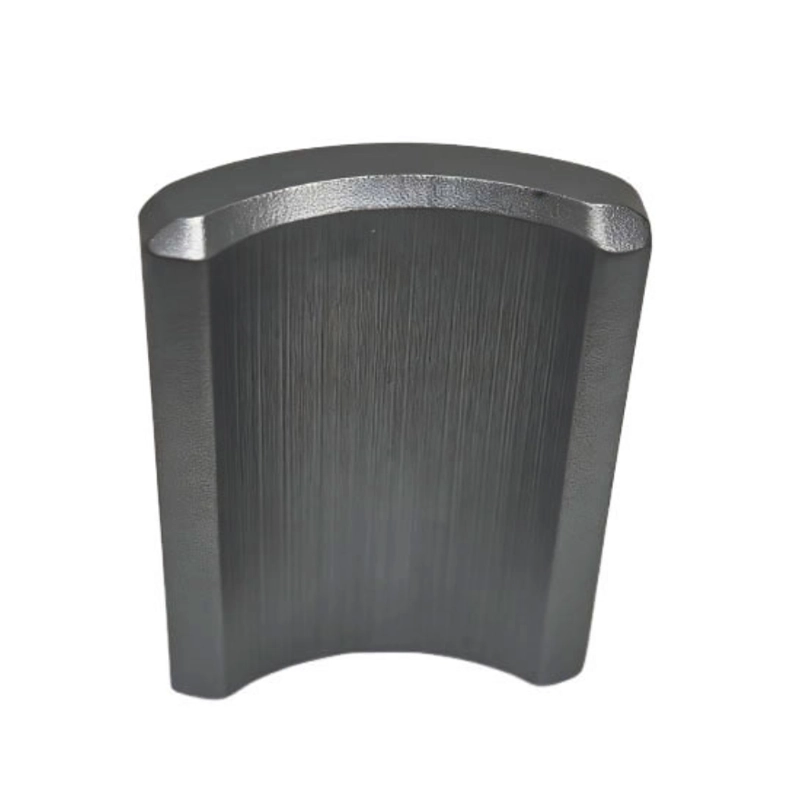
Ferrite arc magnets are common in DC motors, BLDC motors, and auxiliary automotive motors. Their curved surface fits the motor housing or rotor path more closely, helping create smoother magnetic field distribution.
At GAUMU MAGNET, our products include ferrite arc magnets for inverter air conditioner BLDC fan rotors, window lifter motors, 4KW digital motors, treadmill motors, and household brushed motors. These products are designed around motor working conditions rather than general magnetic force alone.
Block, Bar, and Custom Ferrite Magnets
Block and bar ferrite magnets are used in holding systems, magnetic separators, sensors, toys, educational products, and some industrial assemblies. Custom ferrite shapes can also be made when the customer provides drawings, samples, size requirements, magnetic performance targets, and magnetization direction.
For buyers, the key is to share the application early. A motor magnet and a holding magnet may look similar, but their magnetic circuit needs can be very different.
Main Application Industries
Ferrite ring magnets and related ferrite motor magnets are widely used because they support real engineering needs: low cost, stable supply, heat resistance, and long working life. As global motor systems face tighter efficiency requirements, material choice has become part of the design strategy.
The Electric Motor Systems Platform notes that motor systems account for a large share of electricity use, which explains why efficient motor design remains a major industry topic.
Automotive Auxiliary Motors
Modern vehicles use many small and medium motors. Window lifters, seat adjusters, sunroof systems, pumps, locks, fans, and wipers all need reliable magnetic parts. Ferrite magnets are often a practical choice because these motors require durability, cost control, and stable operation more than extreme compactness.
For automotive auxiliary motors, ferrite arc magnets can help support smooth motion and good torque output. GAUMU MAGNET also improves magnetic circuit design for applications such as window operation, seat adjustment, and sunroof motors.
Household Appliance and BLDC Motors
Air conditioners, washing machines, fans, refrigerators, and vacuum cleaners depend on motors that must run quietly and efficiently. In many BLDC designs, ferrite magnets can replace higher-cost rare earth solutions when the motor structure allows more magnet volume.
Ferrite magnets are useful in appliance motors because they provide:
- Stable flux for long running hours
- Good heat resistance
- Low irreversible demagnetization
- Natural anti-corrosion behavior
- Good batch consistency for mass production
Power Tools and Outdoor Equipment
Power tools, lawn mowers, wood-cutting motors, portable pumps, and outdoor generators face vibration, dust, heat, and repeated load changes. Ferrite magnets fit these conditions well when the right grade is selected.
For 4KW digital motors and field machinery, high-performance ferrite magnets can support stable voltage, strong starting torque, and reliable operation in outdoor conditions. This is especially valuable for equipment used in construction, mobile power, and field work.
Fitness Equipment and Treadmill Motors
Treadmill motors need steady output, low vibration, and good resistance to sudden load changes. Ferrite magnets are well suited for medium and large motor components in this area. Selected grades can help reduce vibration and maintain stable performance during repeated acceleration and braking.
This makes ferrite motor magnets a sensible option for fitness equipment manufacturers that need both performance and cost discipline.
Industry Hotspots Shaping Ferrite Magnet Demand
The magnet industry is changing quickly. Demand for electrified systems is rising, yet buyers are also watching material price, supply security, and energy standards. Ferrite magnets fit this trend because they are rare-earth-free and widely available.
Three market forces are especially important:
- Electrification: More vehicles, appliances, tools, and industrial machines rely on electric motors.
- Efficiency rules: Motor and fan efficiency requirements are pushing better magnetic circuit design.
- Supply resilience: Rare earth supply concentration encourages engineers to consider ferrite where the design allows it.
For many products, the future is not about using the strongest magnet at any cost. It is about choosing a magnet that fits the full engineering and purchasing picture.
Conclusion
Ferrite ring magnets play an important role in motors and magnetic assemblies because they bring together stable performance, good heat resistance, corrosion resistance, and strong cost value. They are especially useful in automotive auxiliary motors, BLDC appliance motors, power tools, outdoor equipment, treadmill motors, and industrial magnetic systems. While compact high-power designs may need other materials, many high-volume applications can gain more from ferrite’s reliability and supply stability. For engineers and buyers, the right choice starts with the real working condition: space, load, heat, target cost, pole design, and service life. GAUMU MAGNET supports this process with customized ferrite magnet solutions for motor applications.
FAQs
Q: What are ferrite ring magnets used for?
A: Ferrite ring magnets are used in motors, couplings, sensors, speakers, and magnetic assemblies.
Q: Are ferrite magnets for motors rare-earth-free?
A: Yes. Ferrite magnets for motors are rare-earth-free and support stable long-term purchasing.
Q: Can GAUMU MAGNET customize ferrite ring magnets?
A: Yes. We can customize size, shape, performance, tolerance, and magnetization direction.
Table of Contents
Recent Posts
Why Arc Ferrite Magnets Are Ideal for Rotational Motors
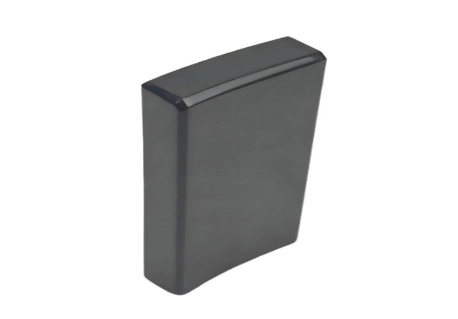
Ceramic Disc Magnet Manufacturer | Custom Ferrite Magnets
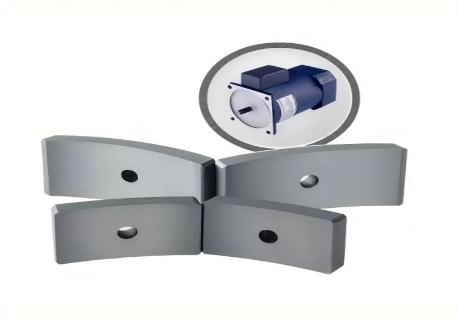
Ferrite Block Magnets Manufacturer | Custom Industrial Motor Magnets
FAQ
What is information we need before quotation for magnet?
2) Size and shape, and magnet tolerances, normally International tolerance is +/-0.1mm
4) Magnetization direction
5) Quantities required.
6) Magnet application