Ferrite Cylinder & Round Magnets: Application in Electronic Devices
Ferrite Cylinder & Round Magnets: Application in Electronic Devices
Within a speaker, a tiny motor, a position sensor, or a daily household appliance, a small magnet frequently does jobs that people easily miss. Ferrite cylinder magnets stay highly practical. This is because they deliver a steady magnetic field at a very reasonable cost. Furthermore, they fight off corrosion effectively. They also handle elevated heat quite well.
However, shape by itself never determines overall performance. An engineer needs to look at the grade, the magnetic direction, and the air gap. The working temperature and the chosen assembly method matter just as much. This helpful guide shows exactly where round and cylindrical ferrite parts belong. It also points out vital details to verify before manufacturing begins.
What Makes Ferrite a Useful Material?
Permanent ferrite serves as a solid ceramic material. It is built mostly out of iron oxide blended with specific strontium or barium compounds. Workers mill, press, sinter, and finally grind this raw mixture. This exact process builds a very hard and stable magnet. It differs completely from the soft ferrite found inside EMI suppression cores.
Material Character and Magnetic Behavior
The completed magnet turns out electrically resistive, extremely hard, and quite brittle. This high electrical resistivity actively stops eddy-current loss near shifting magnetic fields. Ferrite features strong coercivity too. Therefore, a proper grade easily fights off demagnetization inside moving motors and active sensors. On the downside, the material never bends. It might easily chip if something hits it hard.
A standard ferrite grade supplies less total magnetic energy compared to a rare-earth magnet. Sometimes, the physical space allows for bigger components. In those cases, a larger ferrite piece easily gives the needed field strength. It does this at a much lower and highly predictable material cost.
Core Advantages and Practical Limits
The most powerful magnet rarely acts as the smartest choice automatically. A truly balanced design thinks about operating temperature and expected lifetime. It also weighs supply conditions and daily assembly risks. Engineers frequently pick Ceramic ferrite magnets for several clear reasons:
Strong natural resistance against rust. This usually happens without any extra protective coating.
Solid and useful performance across a very wide range of working temperatures.
A highly steady supply chain. This relies entirely on extremely common raw materials.
Very low electrical conductivity. This directly results in minimal eddy-current heating.
Highly competitive pricing. This proves ideal for medium-volume and high-volume factory production.
Ferrite definitely holds a lower remanence than rare-earth materials. It also stays quite vulnerable to sudden cracking. You should avoid tight press fits. Those fits build up dangerous tensile stress. Instead, try using simple adhesive bonding or a basic retaining cup. A molded plastic carrier also works nicely. These gentler methods protect the magnet much better.
Main Types of Cylinder and Round Ferrite Magnets
Round ferrite parts might look identical on the outside. However, their hidden field patterns and daily mechanical roles often differ heavily. Picking the correct category helps your suppliers. It lets them select the best forming and magnetizing processes. You must define the exact geometry before you request a price quote. Also, clarify the magnetization direction and the working air gap. Point out every bonded or ground surface clearly. Finally, identify all the critical inspection points for quality control.
Solid Cylinders, Discs, and Rings
A cylinder measures longer compared to its outer diameter. Meanwhile, a disc stays quite thin and entirely flat. Cylinders fit perfectly into mechanical plungers, tiny sensors, and spinning rotary parts. Discs show up frequently inside audio speakers and loud buzzers. You also find them in magnetic door catches and basic holding systems.
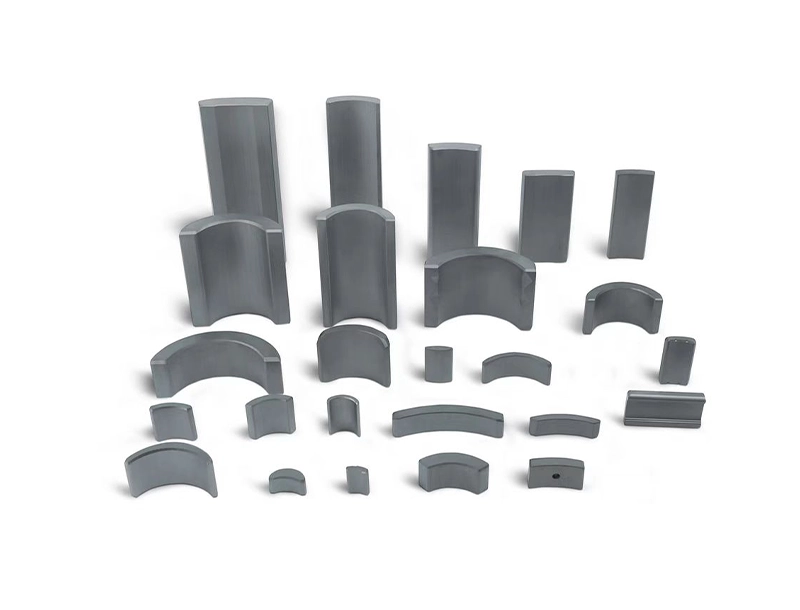
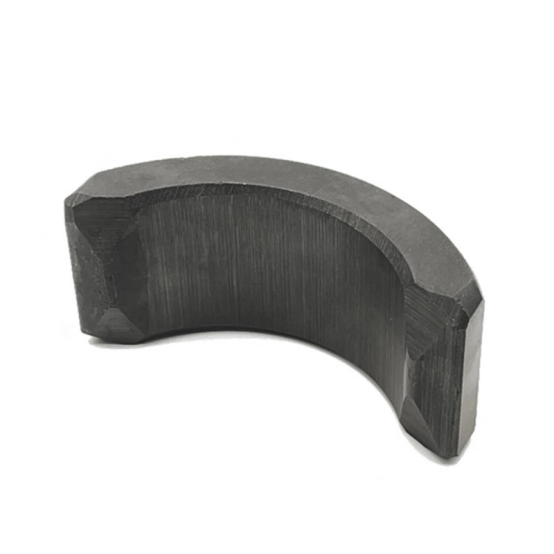
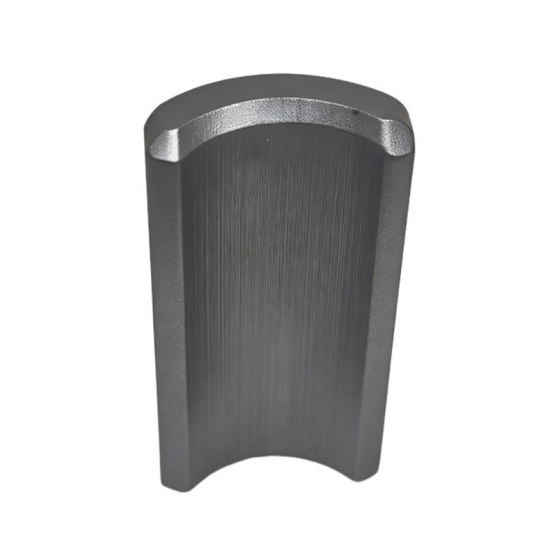
Ring magnets feature a helpful center bore. This open hole makes room for a metal shaft, a tight fastener, or a clear airflow path. It can also shape the magnetic circuit. These rings appear constantly in large loudspeakers, fluid pumps, and motor rotors. They also sit inside many sensing assemblies. Buyers sometimes ask for straight bars, solid blocks, or curved arc segments too. The GAUMU MAGNET product range gives you a great starting point. You can easily compare all these different forms there.
Isotropic, Anisotropic, and Magnetization Choices
Isotropic ferrite takes on magnetization in many different directions after the initial forming. However, its overall magnetic output stays fairly low. Anisotropic material gets perfectly aligned right during the factory production. This careful alignment delivers a much stronger magnetic field along one specific chosen direction.
Axial magnetization puts the magnetic poles directly on the flat circular ends. Diametric magnetization positions those poles on the opposite curved sides instead. Rings frequently utilize radial or complex multipole patterns. Inside a segmented motor, the specific pole arc changes things significantly. It alters the torque ripple, the back-EMF shape, the running noise, and the total usable flux. You must state the exact pole count and the pole arc very clearly on your engineering drawing.
Why Electronic Designers Continue to Choose Ferrite
Energy-efficient motors and much quieter home appliances constantly shape modern device design. Smart connected sensors and raw material risks play huge roles too. Global manufacturers watch the highly concentrated rare-earth supply chains very closely. The IEA’s Global Critical Minerals Outlook 2025 talks about this ongoing concentration. It highlights the tight control over critical-mineral refining. This situation sparks fresh interest in rare-earth-free magnetic designs. Engineers explore these options whenever the physical size and the torque targets permit.
Ferrite definitely cannot replace a premium high-energy magnet inside every single compact drive. Yet, it successfully lowers a company’s exposure to crazy rare-earth price swings. Modern electronics offer much better motor control today. Advanced magnetic-circuit simulation software and clever rotor geometry help immensely. These tools allow smart engineers to pull more usable output from a basic ceramic permanent magnet.
Thermal management remains a highly active engineering topic. Modern electronics grow denser and run hotter every year. Meanwhile, cooling fans, liquid pumps, mechanical actuators, and audio speakers still require deeply dependable magnetic parts. Ferrite handles elevated heat extremely well. Even so, careful designers must always check the specific demagnetization curve. They need to review it at the absolute coldest and the very hottest expected service points.
Applications Across Major Industries
Ferrite cylinder and simple round magnets support both physical motion and electronic sensing. Their remarkably low cost looks very attractive to buyers. However, a highly repeatable field strength matters immensely. The physical fit and the exact magnetic orientation carry just as much weight on a busy assembly line.
Audio and consumer electronics: Standard disc and ring magnets build the necessary static field. They work hard inside audio speakers, loud buzzers, tiny microphones, and safety alarms. A highly stable geometry keeps the vital voice-coil gap perfectly clear.
Small motors and cooling systems: Solid cylinders, open rings, and curved segments work tirelessly. You find them in cooling fans, fluid pumps, kitchen appliances, and rugged power tools. For modern BLDC designs, the chosen grade and the specific pole pattern must align perfectly. They have to match the spinning rotor and the electronic controller.
Automotive electronics: Tough ferrite magnets appear constantly inside car doors. They power the window, seat, sunroof, and windshield wiper motors. You also see them in cabin ventilation and fluid-control pumps. They survive easily through countless repeated starts, sudden stops, and harsh temperature cycles.
Sensors and controls: A basic round magnet quickly triggers a nearby Hall sensor. It can also activate a simple reed switch. This happens inside a lid detector, a fluid level gauge, a pipe flow meter, or a rotary encoder. The actual field strength at the real sensing distance matters the most. It proves far more important than the basic surface flux reading alone.
Industrial and fitness equipment: Running treadmills, electrical generators, and complex magnetic transmissions rely heavily on these parts. Factory control motors also use solid ferrite. Engineers choose it whenever extreme durability and a strictly controlled cost matter the most. This holds especially true across very long factory production runs.
At GAUMU MAGNET, we actively manufacture reliable permanent ferrite materials. We gladly support detailed custom work. This customized support depends entirely on the chemical composition and the required magnetic properties. It also covers the specific shape and the final size. Our robust products serve complex automotive systems and daily household appliances. They support heavy power tools, vital industrial controls, gym fitness equipment, and large generators. We also take time to carefully review any nearby metal parts. We treat them as a crucial part of the total assembly.
Selecting a Magnet for an Electronic Device
Smart material sourcing always starts with the actual operating condition. It never begins with just a generic grade name. Two separate magnets might share the exact same outer dimensions. Yet, they may act completely differently in the real world. This happens after you change the magnetic orientation or the working air gap. A different steel housing or a shifted temperature changes the results too. A truly concise technical request needs to include several things:
A fully dimensioned engineering drawing. It must show all tolerances and mark the critical ground surfaces.
The specific magnetic grade. Otherwise, provide clear target values for the expected remanence, the coercivity, and the maximum energy product.
The exact magnetization direction and the total pole count. You must also explain the planned field acceptance method.
The absolute working limits and the safe storage temperature limits.
Details about the mating materials and the chosen chemical adhesive. Include any coating expectations and the maximum physical assembly load.
The expected annual order quantity and the required sample quantity. Do not forget to list your specific packaging needs.
Always ask exactly how the factory will measure the final magnetic performance. A simple surface reading helps nicely with basic process checks. However, it might not accurately predict the real performance inside a spinning motor or a sensitive sensor. A testing fixture that represents the actual working air gap works much better. It frequently provides far superior acceptance data. Furthermore, chipped edges and loose magnetic dust cause real problems. They can negatively affect the adhesive bonding and ruin the delicate rotor balance.
For special custom work, our dedicated team at GAUMU MAGNET can assess your technical drawings. We can also evaluate your physical samples. We do this long before the final grade and the exact process details get permanently fixed. The primary aim is to perfectly match the required magnetic field. We want to achieve this without using any unnecessary extra material or creating overly fragile dimensions. Interested buyers can easily use the contact page to share your exact dimensions and the required magnetic direction. Please include your expected quantity and your preferred test method.
Magnets and Conductive Alloys in the Same Assembly
A modern electronic device rarely depends entirely on a single magnet alone. It typically needs metal terminals, bouncy spring contacts, and protective EMI shields. It might also require solid frames or special heat-carrying metal parts. Therefore, copper alloy strips absolutely belong in the broader material discussion. This remains true even though their specific role stays purely electrical or strictly mechanical.
For a great example, a c2680 brass strip offers extremely good formability and excellent ductility. It also delivers wonderful drawing performance and easy weldability. It shows a fantastic plating response and strong natural corrosion resistance. Manufacturers use material c2680 constantly inside consumer electronics and home appliances. It appears in critical communications hardware and vehicle radiator tubes. You might want to compare c2680 material with another different metal alloy. When you do, clearly state the required temper and the exact metal thickness. Also, mention the needed bend radius, the electrical conductivity, the planned joining method, and the final surface finish.
Several other copper alloy strips suit demanding spring contacts or complex lead frames perfectly. Meanwhile, a truly high performance alloy strip can easily meet much greater physical strength requirements. It handles extreme heat-resistance or tough stress-relaxation needs beautifully. GAUMU MAGNET proudly supplies premium metallic materials right alongside our core magnetic products. This convenient setup greatly simplifies any technical discussion. It makes talking about compatible materials and factory processing much easier.
Conclusion
Ferrite cylinder magnets remain highly relevant today. They effectively answer a very real engineering need. They deliver deeply dependable permanent magnetism. They do this without the scary rare-earth cost or the dangerous supply chain exposure. Their natural corrosion resistance and high electrical resistivity help immensely. Their broad temperature capability and wide range of available round forms fit many jobs. They suit audio speakers, electric motors, sensitive sensors, and fluid pumps perfectly. They also work in home appliances, automotive auxiliaries, and heavy industrial controls. Ultimate success still depends entirely on the tiny details. You must carefully choose the magnetic grade against the full expected temperature range. Clearly define the axial, diametric, radial, or complex multipole magnetization. Always test the resulting field inside a truly representative magnetic circuit. Treat the hard material exactly like a brittle ceramic during the final bonding and assembly stages. Finally, review all the nearby conductive metal parts carefully. This includes C2680 brass and various other copper alloys. Treat them as a vital part of the complete electronic device. A very clear engineering drawing helps everyone. A smart application-based test plan also makes a huge difference. Together, they make the long path from the first sample to stable mass production much shorter.
FAQs
Q: What is the typical maximum operating temperature of ferrite cylinder magnets?
A: Certain special grades easily reach up to 250°C. However, the officially approved temperature limit must closely follow the specific grade and the exact magnetic circuit design.
Q: Are round ferrite magnets suitable for outdoor electronic devices?
A: Yes, they certainly are. Their natural corrosion resistance remains quite good. Even so, the complete physical assembly still needs proper external moisture protection.
Q: What information is needed for a custom ferrite magnet quote?
A: You need to provide the exact dimensions in mm. Also, share the requested grade, the magnetization direction, and the working temperature. Include your preferred test method, the total quantity in pieces, and the final intended application.



 OEM/ODM If you ... 1. Are looking for OEM/ODM manufacturers in this industry. 2. Need someone that can produce what you want and have a custom design printed to your specification. Then our OEM/ODM service is for you!
 Sample Order If you… 1. Want to purchase a sample order first. 2. Purchase a full order after validating the product quality. Then our Sample Order service is for you!
 Factory Tour If you... 1. Would like more information about our company. 2. Would like to visit China and are interested in working with us. Then our Factory Tour service is for you!