
- 23rd October 2026
Rectangular & Square Ceramic Magnets: Design and Industrial Application
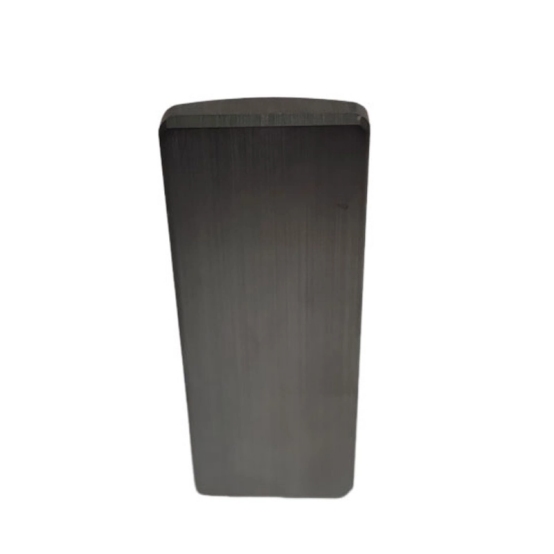
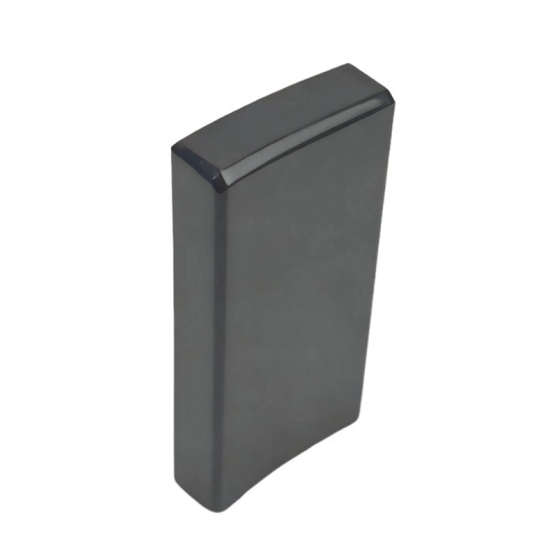
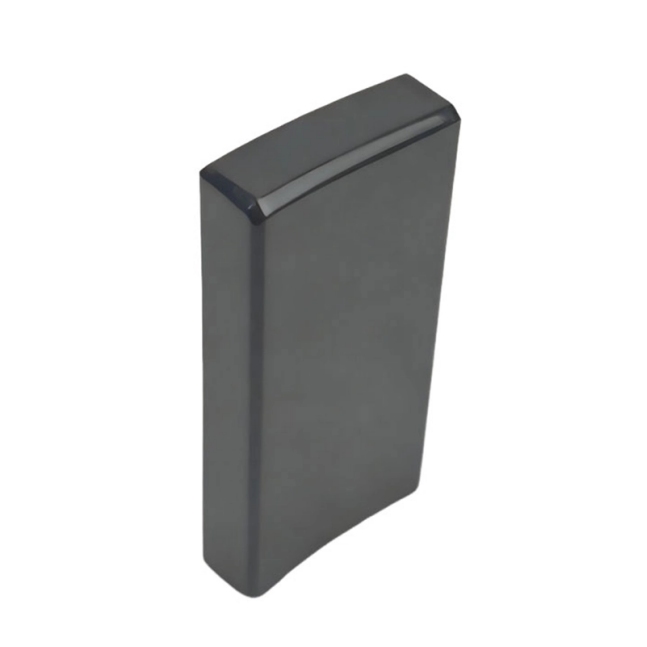
Ceramic magnets with rectangular or square shapes are commonly found in applications like motors, sensors, speakers and large machinery. They have flat faces and straight edges which allows for easy installation into housings and other magnetic assemblies. Ferrite is the typical material used for these types of magnets as it is non corroding and cost effective. These magnets are large enough to provide good value when there is enough room in the design.
Although the magnetic strength of these parts is lower than that of many rare-earth materials, this is not necessarily a ‘defect’ that needs to be avoided at all costs. The choice of part will depend on a number of factors including the magnetic circuit configuration and the operating temperature. Other critical parameters such as the air gap and power output required are also increasingly important. The growth of electrification across road vehicles, domestic appliances and industrial machinery is becoming increasingly apparent. The selection of materials must now consider issues of availability and potential supply chain problems as well as traditional performance issues.
What Makes Ceramic Ferrite Magnets Different?
“Ceramic” describes how a factory could make a material, and “ferrite” describes the magnetic properties of the material. So, in addition to the shape of rectangular and square parts, the description of a part also needs to include the grade of a magnet and its magnetization direction. The dimensions and the way the part will be assembled also have a large influence on the magnetic field that the part will produce in its final application.
Material and manufacturing
The ceramic ferrite magnets are mostly made by manufacturers mixing iron oxide with strontium or barium compounds. First, the raw material is ground into a fine powder. Then the powder is pressed into the desired form. The ferrite magnet is then sintered at high temperature using a production line. The sintered magnets are then polished and grinded to exact size and surface quality in the factory.
Our last magnet is hard but rather brittle. By its very nature this magnet will resist simple rust and corrosion, so it doesn’t need to be covered in thick metallic coatings as many other magnets are. This magnet will break or chip easily though, if hit for example, or subjected to uneven pressure. It must also be installed correctly and provided with suitable physical support. The designers must take account of the physical limits of this magnet when deciding upon methods of assembly and the corresponding size tolerances.
Magnetic behavior in service
While Ferrite holds less magnetic energy than most Rare Earth magnets, the volume of a Ferrite magnet required to achieve the same amount of power as a Rare Earth magnet can be larger. Also, a smaller air gap is required in the magnetic circuit. Ferrite is strong against demagnetization and runs well in many everyday applications. Ferrite offers a cost effective and durable solution.
The heat limit of a magnet depends on the specific grade and on the whole assembly. In addition to the glue, nearby steel parts, mechanical stress and the operational cycles of the motor also have to be taken into account when designing motor applications. The temperature curve of the magnet has to be tested on the assembly under real load. Do not rely solely on the material group of your magnet.
Shapes, Magnetization, and Design Choices
Within the ferrite block category, rectangular and square magnets are commonly supplied. In terms of physical shape, these can be easily placed in a repeatable fashion. However, a magnet’s magnetic performance is defined by more than simply its shape. Before selecting a part, consideration must be given to how the poles of the magnet will face the circuit, as well as where the magnet will be sitting in relation to the nearest coil, rotor, sensor or target.
Square blocks and rectangular blocks
The faces of square magnets are of equal size. These types of magnets are often very useful in projects that require a small, even area. Rectangular magnets have longer faces when viewed along one axis. These are very good for use in long, straight configurations or in very tight housings. In addition, they can be used to create very specific magnetic paths in assemblies.
Both shapes can be axially magnetized through the wide faces. They can also be magnetized in different directions, to suit a particular application. It’s always wise to check the correct orientation using a drawing or test sample. A magnet may look the right size and shape to your physical drawings but, be wrong, with the wrong pole orientation, for producing the correct magnetic field.
Related ferrite forms
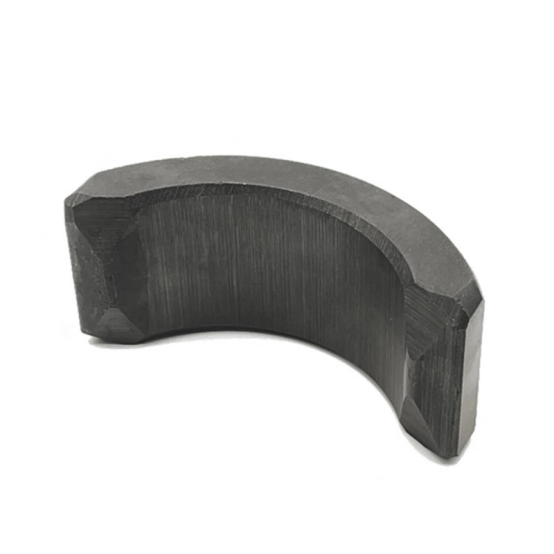
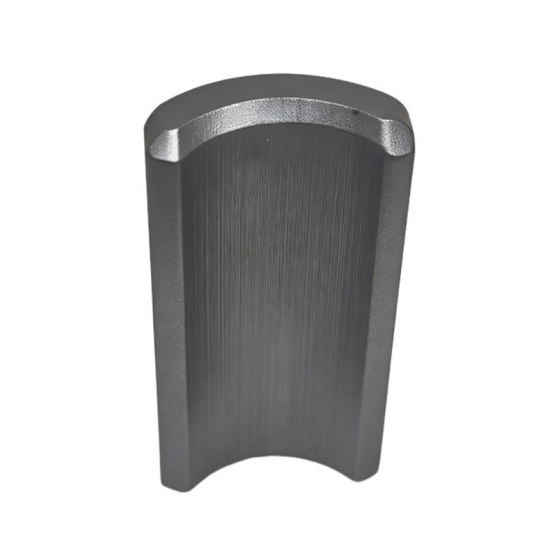
Different shapes of permanent magnets like disc, ring, cylinder, arc and block have different mechanical and magnetic applications. A ring or disc of magnets is easily placed inside a round part. An arc of a curve of a magnet can be used to smoothly wrap around a motor rotor. In these applications the pole arc and the magnetization of the magnets determine how the magnetic field develops in the air gap under study.
If a project involves a flat magnetic circuit, rectangular ceramic magnets often serve as an ideal starting point. For spinning systems, a designer might require an arc or another custom shape instead. GAUMU MAGNET provides a wide ceramic ferrite magnet range for motor and industrial applications. Because of this variety, buyers can easily compare different shapes against their actual assembly needs. They do not have to pick a product simply by its name.
Where Industrial Teams Use Them
The exact same ferrite material shows up in many different types of equipment. This happens because the system’s layout changes the actual job the magnet does. Some pieces hold or guide metal components. Other parts help a sensor track movement or boost torque inside a motor. Ultimately, the end application dictates the required grade, shape, and assembly details.
Motors, appliances, and automation
Engineers frequently put rectangular and square ferrite blocks into motor assemblies. They do this when a steady magnetic field and low material costs are top priorities. Factories also use similar ferrite designs in home appliances, liquid pumps, power tools, cooling fans, and automated factory machines. Motor designers have to look closely at the air gap and rotor geometry. They must also plan for heat, running speed, and the dangers of heavy vibration or loud noise.
Modern industries care deeply about electrification and smart energy use. This focus brings heavy attention to motor efficiency and reliable supply chains. Ferrite acts as a great rare-earth-free choice if the product has enough space for the needed magnet size. However, it cannot directly replace rare-earth magnets in every single motor. Overall performance relies entirely on the complete electromagnetic design. GAUMU MAGNET supplies durable ferrite parts for automotive motor applications and BLDC motor applications.
Sensors, speakers, and industrial equipment
Inside sensors and switches, a tiny block magnet easily triggers a reed switch. It can also supply a magnetic field to track position and speed. Speakers and similar audio devices rely on magnetic assemblies to push a diaphragm or voice coil. In all these cases, part consistency remains incredibly important. Any slight change in dimensions or magnetization strength will alter the final signal or sound output.
Heavy industrial systems often place ferrite blocks into magnetic fixtures, metal separators, couplings, and control panels. A solid design always starts by defining the main operating task. Is the magnet supposed to hold objects, sense motion, flip a switch, or drive a motor? Answering this question helps narrow down the correct shape and field direction long before buyers request a price quote.
Fitness equipment and outdoor systems
Motor-driven items like treadmills, lawn care tools, and outdoor machines face tough conditions. They must survive frequent starts, heavy vibration, and shifting weight loads. A treadmill magnet often goes into the main motor or a small sensing unit. Still, the required shape and material grade depend entirely on the specific machine’s design. GAUMU MAGNET details many ferrite solutions for fitness equipment and treadmill motors.
Selecting a Supplier and Specifying the Part
A productive talk with a supplier begins with deep application details. It should not stop at just the magnet size. Buyers must provide a technical drawing or a physical sample. They should also share the expected operating environment. When a team compares a ferrite magnet supplier, they must ask important questions. They need to know how the suggested grade and magnetization direction match the assembly’s air gap, heat levels, and mechanical supports.
Before requesting a quote, prepare:
- Shape, length, width, thickness, and dimensional tolerances
- Magnetization direction or multipole pattern
- Operating temperature, load, and expected service conditions
- Assembly method, housing material, and air gap
- Target quantity, inspection needs, and delivery schedule
Metal components frequently sit next to magnets in a built assembly. However, they remain totally separate materials with very different jobs. For instance, builders might use C2680 brass strip or other copper alloy strips for electrical terminals, contacts, or structural frames. These metals work well when their unique traits fit the project. They are absolutely not ingredients inside a ceramic ferrite magnet. GAUMU MAGNET also offers brass strip and similar metallic materials. Customers should specify material C2680 or a high performance alloy strip only if the technical drawing and the end application truly demand it.
Engineers often search for “gaumu” ferrite components online. After finding them, the best next step involves sharing the drawing and operating conditions directly with GAUMU MAGNET. From there, our team can discuss the options. We will determine whether a square block, a rectangular magnet, or another unique ferrite form perfectly fits the planned assembly.
Conclusion
Rectangular and square ceramic magnets stay highly relevant across motors, sensors, speakers, home appliances, and heavy industrial equipment. They offer great corrosion resistance and steady magnetic behavior. Furthermore, their low cost makes them a fantastic choice if a design can handle ferrite’s lower magnetic energy. The physical shape is merely one piece of the puzzle. The material grade, pole direction, air gap, heat levels, and physical support all change the final performance. Today, manufacturers focus heavily on electrification, motor efficiency, and strong supply chains. In this environment, ferrite gives engineers a reliable material path to explore. It is not a magic replacement for every other magnet type. GAUMU MAGNET actively partners with customers to match specific ferrite shapes to actual assembly requirements. We always use detailed drawings and operating facts to guide every technical conversation.
FAQs
Q: What are rectangular ceramic magnets used for?
A: Builders place them inside motors, sensors, speakers, electrical switches, and heavy industrial magnetic assemblies.
Q: Are square ceramic magnets resistant to corrosion?
A: Yes. Ferrite naturally fights off rust and corrosion. However, the full finished assembly might still require extra environmental protection.
Q: How do I select rectangular ceramic magnets?
A: You must compare the material grade, exact dimensions, and magnetization direction. You should also evaluate the working temperature, air gap size, and planned assembly method.
Table of Contents
Recent Posts
How Are Large and Small Arc Magnets Used in Different Applications?
How Arc Magnets Improve the Efficiency of Automotive Motor Systems
Ferrite Cylinder & Round Magnets: Application in Electronic Devices
FAQ
What is information we need before quotation for magnet?
2) Size and shape, and magnet tolerances, normally International tolerance is +/-0.1mm
4) Magnetization direction
5) Quantities required.
6) Magnet application