
- 5th May 2026
Flywheel magnets are critical magnetic components in motors, generators, and small power systems. Their performance directly impacts efficiency, stability, and service life. Here are the 10 most common questions and answers for engineers and buyers.
Q1: What is a flywheel magnet?
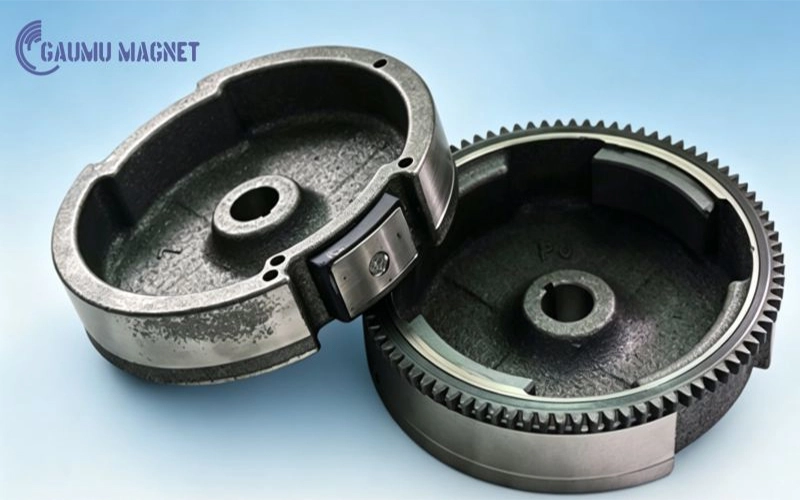
A flywheel magnet is a permanent magnet mounted on a rotating flywheel (magneto rotor) to generate a stable magnetic field, widely used in small engines, generators, magnetic bikes, and garden machinery.
Q2: What materials are commonly used for flywheel magnets?
The main materials are ferrite magnets (cost-effective & stable) and neodymium magnets (high magnetic strength & compact size).
Q3: What structures do flywheel magnets usually have?
They are typically designed as arc-shaped segments or one-piece magnetic rings to fit different rotor diameters and pole requirements.
Q4: How to tell if a flywheel magnet is damaged or demagnetized?
Common symptoms include:
Hard starting or unstable ignition
Reduced engine power and poor combustion
Insufficient generator output or weak lighting
These are usually caused by magnetic loss or demagnetization.
Q5: What is the function of flywheel magnets?
They induce electromotive force by rotating relative to coils, supporting ignition and charging systems, and ensuring stable operation of engines and motors.
Q6: How long do flywheel magnets last?
With proper use (no overheating, no strong impact), high-quality flywheel magnets can last for years. High temperatures or harsh environments may accelerate demagnetization.
Q7: Are all flywheel magnets the same?
No. They vary in size, arc, pole number, magnetic grade, and temperature resistance and must be matched to specific applications.
Q8: Can I replace only one damaged flywheel magnet?
Technically yes, but full set replacement is recommended to ensure uniform magnetic field distribution and avoid vibration or abnormal performance.
Q9: What temperature resistance is required?
General motors: 80–120°C
Gasoline engine flywheels: above 150°C
High-temperature applications: 180°C+
Inappropriate temperature grades lead to irreversible demagnetization.
Q10: Is stronger magnetism always better?
No. Magnetic strength must match system design. Excessively high magnetism can cause signal distortion, increased losses, and unnecessary cost.
If you need custom flywheel magnets, technical support or quotations, feel free to contact us.📩 shirley@gaumumagnet.com
Table of Contents
Recent Posts
Why Arc Ferrite Magnets Are Ideal for Rotational Motors
Ceramic Disc Magnet Manufacturer | Custom Ferrite Magnets
Ferrite Block Magnets Manufacturer | Custom Industrial Motor Magnets
FAQ
What is information we need before quotation for magnet?
2) Size and shape, and magnet tolerances, normally International tolerance is +/-0.1mm
4) Magnetization direction
5) Quantities required.
6) Magnet application